
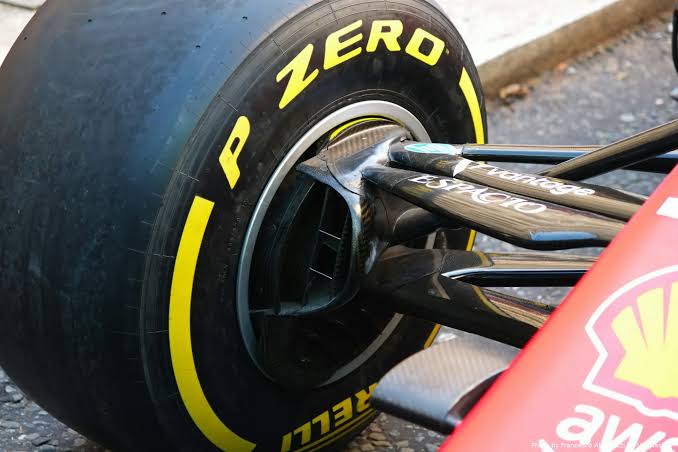


Monza remains Formula 1’s ultimate aerodynamic paradox, where the pursuit of minimal drag through ultra-skinny wing packages collides head-on with the thermal and mechanical limits of modern tyres. In 2026, with new power-unit regulations and revised aero maps, the “Temple of Speed” has become an even sharper test of engineering trade-offs, as teams balance DRS trap speeds against brake-zone stability and rear-axle longevity over a race distance.
The defining characteristic of a Monza setup is drag reduction. Teams arrive with one-off low-downforce rear wings, trimmed front-wing top flaps, and, in some cases, removal of small downforce-generating elements such as hanger flaps and beam-wing intricacies. Ferrari’s SF-26, for example, has been seen evaluating the removal of its FTM (flow-conditioning) components to eke out additional top speed, while Red Bull’s 2025-inspired low-drag beam wing—featuring a wavy lower element and a skinny second plane—aims to cut drag while retaining just enough vertical load to stabilize the rear under traction.
Telemetry from recent sessions underscores the stakes. DRS trap speeds at Monza regularly exceed 355 km/h, with the longest straight amplifying even minor drag differences into multi-tenths-per-lap advantages. Yet the gains in straight-line velocity come at a cost: reduced downforce lowers cornering grip through the Lesmos and Parabolica, increasing slip angles and rear-tyre slide on exit. This dynamic elevates rear-tyre temperatures, accelerates thermal degradation, and, on softer compounds, can trigger graining on the front axle as the tyre core fails to reach optimal operating temperature while the surface overheats under lateral load.
The 2026 cars face an additional layer of complexity with the so-called “super clipping” phenomenon, where simulations predict significant straight-line speed loss if power-unit deployment and drag management are not perfectly aligned. Teams must therefore calibrate not only wing levels but also ride height, brake pressure, and differential settings to maintain traction out of the chicanes without overloading the rear tyres. High brake pressure is essential—Monza’s chicanes demand among the heaviest deceleration forces on the calendar—and any instability under braking can magnify tyre wear and compromise lap-time consistency.
From a race-strategy perspective, the conundrum becomes a question of stint length versus peak pace. A more aggressive, lower-downforce configuration may deliver superior qualifying laps and DRS overtaking opportunities, but it risks accelerated degradation that forces earlier pit stops or mandates conservative driving mid-race. Conversely, a slightly higher-downforce setup can improve tyre life and brake-zone stability, yet it sacrifices straight-line speed and slipstream effectiveness, potentially neutralizing overtaking advantages in clean air.
In 2026, the teams that best reconcile these competing demands—maximizing DRS trap speeds while preserving rear-axle integrity and brake performance—will hold the edge at Monza. As telemetry and tyre data evolve through practice and qualifying, the “Temple of Speed” will once again separate those who master the aero-tyre equilibrium from those forced to compromise between raw velocity and race-distance durability.