
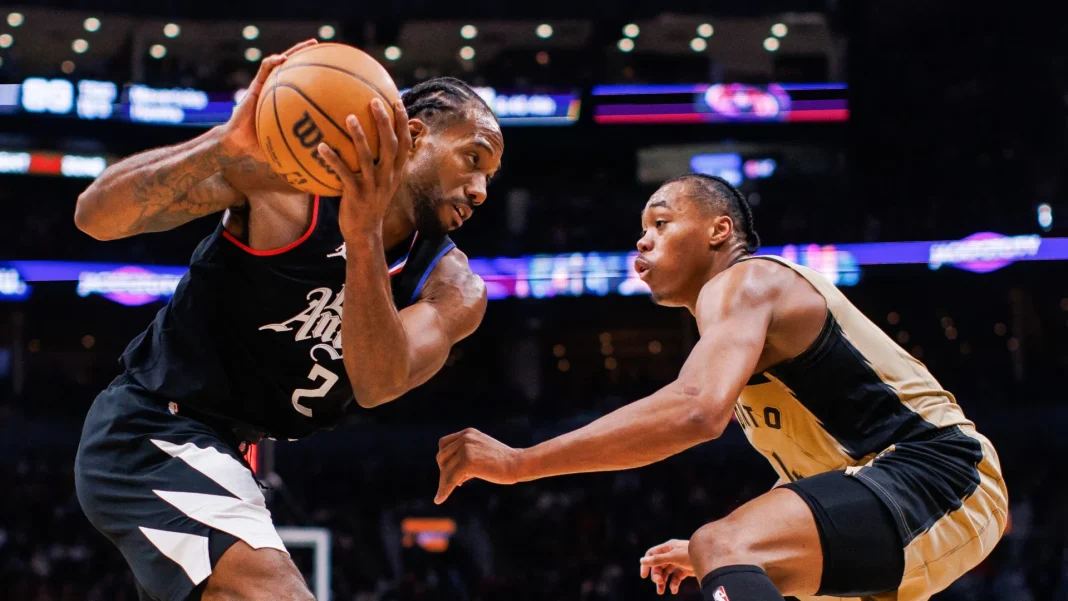


Kawhi Leonard is officially returning to the Toronto Raptors, closing one of the most unusual chapters in recent NBA trade history. The blockbuster move was delayed for months while the league investigated alleged salary-cap circumvention involving Leonard and the Los Angeles Clippers. After the investigation concluded, the NBA approved the deal, sending Leonard back to the franchise where he won the 2019 championship.
Toronto’s decision is about far more than acquiring a star. It is an attempt to reconnect with an identity that has defined the organisation’s most successful era. Leonard arrived in Toronto in 2018 and immediately transformed the team’s ceiling. His defensive versatility, postseason composure and ability to create difficult shots helped the Raptors defeat the Golden State Warriors and win the only championship in franchise history.
Bringing him back carries enormous emotional value, but nostalgia cannot be the only reason for the trade. Leonard is now 35, and the Raptors are paying a substantial price for a player whose availability and long-term durability must be managed carefully. Toronto is sending Brandon Ingram, Gradey Dick, unprotected first-round picks in 2031 and 2033, a 2027 pick swap and two future second-round selections to Los Angeles.
The immediate basketball logic is clear. Leonard gives Toronto an elite two-way forward who can defend multiple positions, absorb difficult assignments and create offence in late-clock situations. His presence should improve the team’s half-court execution, particularly in playoff games where possessions become slower and every defensive mistake is punished. He also gives younger Raptors a proven postseason reference point, something that cannot be replicated through ordinary regular-season experience.
Yet the risk is equally obvious. The Raptors have sacrificed future flexibility for a player whose value will depend heavily on health, workload management and the quality of the roster around him. Ingram is younger and offers offensive production, while Dick represents a developing perimeter asset. The unprotected first-round picks could become especially valuable if Toronto’s current plan fails and Leonard’s physical decline arrives before the team is ready to compete.
The Clippers, meanwhile, are entering a reset with a package designed to extend their competitive timeline. Ingram provides a new scoring option, while Dick adds youth and shooting potential. The draft compensation may be the most important part of the return, although the Clippers’ own punishment complicates the value of those assets. The NBA fined the franchise $30 million, suspended key executives and forced it to forfeit five first-round picks from 2029 through 2033 after determining that salary-cap rules had been violated.
That punishment also explains why the trade became such a major league story. The agreement was reached in June but remained frozen while the investigation continued. Leonard was fined $700,000, but the NBA did not void his contract or suspend him, allowing the transaction to proceed once the league’s findings were announced.
For Toronto, the central question is whether Leonard can create a genuine championship window rather than a brief period of excitement. The franchise must surround him with reliable shooting, secondary playmaking and enough defensive depth to reduce his regular-season workload. If those pieces align, his return could reignite the Raptors’ belief that another deep playoff run is possible.
If they do not, the deal may become a symbol of overpaying for a glorious memory. Toronto has chosen certainty in the present over flexibility in the future. That is a bold decision, but it is also a clear statement: the Raptors believe Kawhi Leonard’s championship influence is worth the risk.