
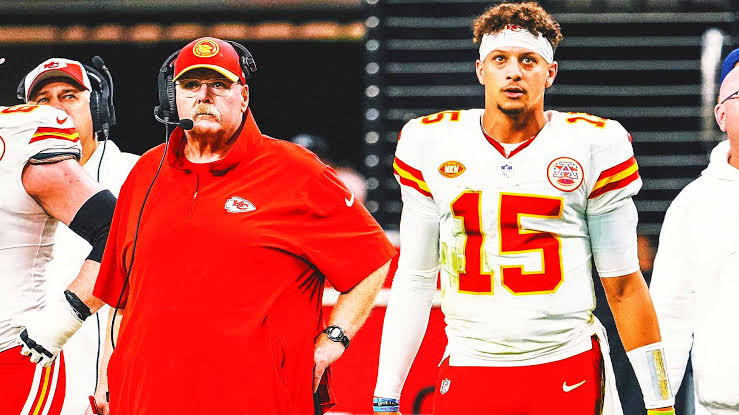


Patrick Mahomes’ return from a serious knee injury delivered the kind of performance Kansas City wanted, but the Chiefs’ 31-10 victory over the Denver Broncos also created a fresh conversation about officiating standards. Mahomes completed his comeback after nine months of rehabilitation, throwing two touchdown passes and adding a rushing score in his first regular-season appearance since tearing ligaments in his left knee.
The most encouraging aspect of Mahomes’ return was not simply the statistics. It was the way Andy Reid managed the quarterback’s exposure to unnecessary punishment. Kansas City used protection concepts that reduced the number of occasions on which Mahomes had to remain in a collapsing pocket. Quick throws, defined launch points and a willingness to use his mobility allowed the Chiefs to keep the offence moving without demanding that he repeatedly absorb direct contact.
That adjustment is important for a quarterback returning from knee surgery. Mahomes’ greatest strength has always been his ability to create outside structure, but constant improvisation can place stress on the repaired leg. Reid appeared to balance freedom and restraint. The quarterback still had permission to move when a play broke down, yet the offence did not rely exclusively on spectacular escapes. Instead, Kansas City created clearer first reads and used movement to prevent Denver’s pass rush from attacking the same point on every snap.
Mahomes’ rushing touchdown offered another indication of his confidence. A quarterback returning from a major knee injury may hesitate when the opportunity to run appears, especially near the goal line where defenders close quickly. Mahomes accelerated decisively and finished the play, suggesting that the rehabilitation process had restored enough trust in his movement for him to compete naturally rather than protect the leg on every snap. He entered the game nine months after surgery and had missed all three preseason contests, making the performance even more significant.
However, the touchdown also became the centre of the night’s controversy. Replays appeared to show Travis Kelce restricting Broncos safety Talanoa Hufanga near the goal line as Mahomes crossed into the end zone. ESPN analysts Troy Aikman and rules analyst Russell Yurk both argued that the contact could have warranted an offensive holding penalty. Had the flag been thrown, the touchdown would likely have been erased.
The debate is not about whether every physical exchange should be penalised. Blocking and hand fighting are part of football, particularly in crowded red-zone situations. The concern is consistency. If officials allow a clear restriction that directly changes a scoring play, fans and teams naturally question whether the same standard would be applied to any other club.
Replay rules make the discussion more complicated. The NFL already reviews scoring plays, but a missed holding call is generally not subject to the same automatic correction process as whether a runner crossed the goal line. Expanding review powers could improve accuracy, but it could also slow the game and encourage coaches to challenge marginal contact on almost every important play. The league must decide whether correcting obvious errors is worth increasing interruptions.
The incident should not be treated as evidence of a deliberate effort to favour Kansas City. No proof has emerged that officials intentionally manipulated the contest. Still, perception matters, especially when the Chiefs are involved in another high-profile controversy. A transparent explanation from the league would help separate officiating error from conspiracy-driven speculation.
Mahomes’ comeback ultimately deserves to stand on its own. Reid’s protection plan limited unnecessary risk, the quarterback showed mobility and Kansas City controlled Denver comfortably. But the Kelce incident highlights a larger integrity challenge: supporters can accept human error, yet they expect the rules to be applied consistently and reviewed intelligently when a missed call directly influences a touchdown.