
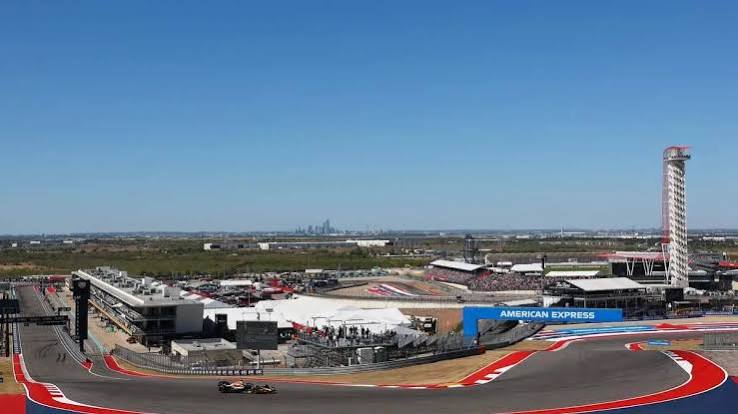


The United States Grand Prix at the Circuit of the Americas has become a setup laboratory, and the central variable is ride height. COTA’s opening sector combines fast, flowing direction changes with a notoriously uneven surface, forcing teams to decide whether to protect aerodynamic performance through the high-speed esses or raise the car to survive the bumps. That compromise is splitting the front-runners because the ideal setup for Sector 1 is rarely ideal for the slower, traction-heavy final sector.
The challenge begins with the track itself. COTA climbs more than 40 metres overall, including a 133-metre rise from the start line to the braking zone for Turn 1, before flowing through a sequence inspired by Silverstone’s Maggotts and Becketts complex. Those corners demand rhythm, aerodynamic stability, and a car that stays close to the ground without losing composure over the surface’s undulations.
Running low creates downforce, but it also increases the risk of bottoming out. Teams must keep the plank legal after the race, so a setup that is too aggressive can wear the plank excessively and compromise race distance. Go too high, however, and the car loses downforce, making it harder to carry speed through the high-speed sweeps and more difficult to generate grip in the slower corners.
The 2026 regulations have made that balance more sensitive. Max Verstappen explained that the current cars rise in straight-line mode and then drop aggressively as the wings reattach under braking, causing them to run lower through corners and bottom out more severely than the previous ground-effect generation. That dynamic makes COTA’s bumps particularly punishing: a car can appear stable on a smooth section, then lose platform control exactly where drivers need confidence through the esses.
Sector 1 therefore exposes a car’s aerodynamic platform. Teams are adjusting damper settings, overall stiffness, and ride heights to absorb the bumps while preserving the load needed through Turns 3 to 6. Red Bull acknowledged that pushing the tyres too hard early can compromise the rest of the lap, while Ferrari’s Charles Leclerc admitted he was uncomfortable with a different setup direction, especially over the bumps.
The final sector creates the opposite problem. It contains slower corners and repeated acceleration zones, placing thermal stress on the rear tyres and demanding strong traction. A car softened to cope with Sector 1 may feel more compliant over the bumps, but it can become vague under braking or lose rotational response in the stadium section. A car stiffened for high-speed stability may protect the platform but struggle to put power down cleanly on exit.
That is why Friday practice mattered so much. Teams used the sessions to establish a baseline ride height, assess plank wear, and gather driver feedback before refining their setups for qualifying and the race. Leclerc topped FP1 ahead of Verstappen and Norris, but the session’s real value was less about the timesheet than about identifying which cars could handle COTA’s bumps without sacrificing high-speed balance.
The Sprint detail in the premise needs correction: COTA is not running the Sprint format in 2026. The weekend has returned to the traditional schedule, with three practice sessions, Saturday qualifying, and a 56-lap Grand Prix on Sunday. That gives teams more setup time than a Sprint weekend would allow, but it also raises the stakes: a poor ride-height compromise cannot be hidden behind a short-format race.
The front-runners’ pecking order at COTA may therefore depend less on raw straight-line speed than on which team finds the best middle ground. The fastest car will be the one that can ride the bumps without losing downforce, protect its plank over a long stint, and still deliver traction in the final sector. At COTA, ride height is not a minor adjustment; it is the difference between a balanced lap and a car fighting its own platform.