


Formula 1’s 2026 championship run-in has increasingly been shaped by a factor that rarely makes headlines: low-speed traction. Singapore’s Marina Bay Street Circuit offered the clearest evidence, where exit-phase performance, rear-tyre management and mechanical grip separated the cars more decisively than outright top speed.
Kimi Antonelli leads the drivers’ championship by 102 points over Mercedes teammate George Russell with six rounds remaining, while Max Verstappen’s dominant Singapore victory came too late to revive his own title hopes. Verstappen sits fourth, 119 points behind Antonelli, with only 150 points still available.
Singapore exposed why low-speed traction has become such a decisive variable. The circuit features 19 corners, repeated heavy braking zones and slow acceleration phases, placing constant demand on the rear axle during traction. Pirelli expected degradation to be linked primarily to rear-tyre performance in those phases, rather than excessive graining or wear.
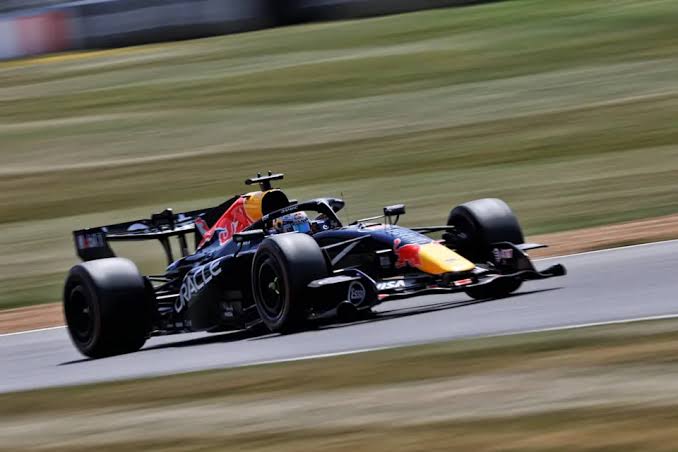
Telemetry from the race highlighted the same pattern. A car that can put power down cleanly through the slow corners gains time at every exit, while a car with rear instability must protect its tyres, reduce throttle application and lose cumulative lap time. Verstappen’s Red Bull managed that balance better than anyone, converting pole position into a controlled victory after surviving an early battle with Charles Leclerc.
Ferrari’s race illustrated the cost of getting it wrong. Lewis Hamilton started on medium tyres hoping to run long and make a one-stop strategy work, but the compound did not perform as expected. His tyres faded badly in the closing laps, costing him three positions and dropping him to sixth.
Hamilton later explained the trade-off: “At a track that’s difficult to overtake, you need to try something different and I chose to start on a new Medium tyre, to go long and try to make a one-stop work. Unfortunately the Medium didn’t perform as well as the soft.” His decision to remain out during a Virtual Safety Car, rather than pit as Ferrari instructed, ultimately left him exposed on old rubber.
The broader technical debate has also intensified. Williams’ Alex Albon said the 2026 regulations’ Straight Line Mode and associated tyre-pressure safety measures contributed to unusually durable soft tyres in Singapore, reducing degradation but also limiting strategic variation. Pirelli confirmed that the C5 soft was the standout tyre, delivering long stints and strong performance, though drivers needed to monitor the rear-right tyre.
Mercedes’ situation adds another layer to the championship picture. The team brought Russell back to an older car specification in Singapore because of the high ambient temperature and severe tyre degradation, underlining how sensitive the W17 has become in demanding conditions. Russell’s recent setbacks—a power-unit failure in Malaysia and a sprint crash in Singapore—have widened Antonelli’s advantage at the worst possible time.
The remaining calendar will test different traction profiles. Street circuits reward mechanical grip, precise turn-in and controlled rear-tyre temperatures, while faster venues place greater emphasis on aerodynamic efficiency and high-speed stability. Red Bull’s recent improvement suggests Verstappen can still influence the standings, but Antonelli’s consistency has made the title fight increasingly mathematical rather than competitive.
If the late season continues to be decided by traction-limited circuits, teams with stable rear ends and efficient energy deployment will hold the advantage. Singapore showed that in 2026, the fastest car is not always the one with the most straight-line speed—it is the one that can leave slow corners without wasting a single metre of tyre life.