
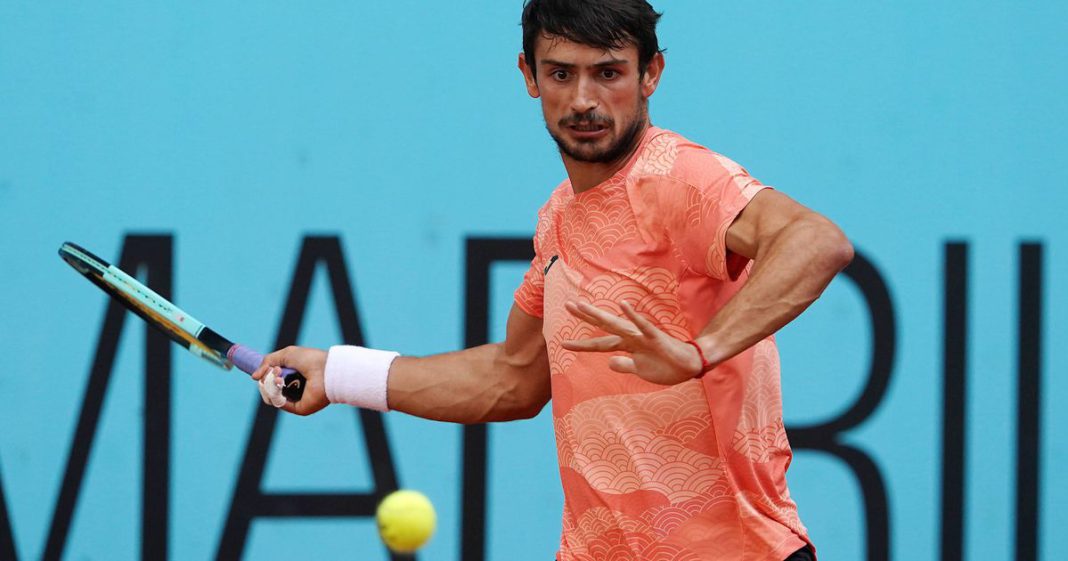


Mariano Navone’s five‑set demolition of Novak Djokovic at the US Open is more than a headline upset; it is a stark signal that the men’s game is entering a new phase where endurance, tactical discipline and physical resilience can topple even the most decorated champions.
The 25‑year‑old Argentine, ranked 49th in the world, stunned the 39‑year‑old Serb 7‑6(5), 5‑7, 4‑6, 6‑2, 6‑1 in a grueling four‑hour, 36‑minute marathon at Arthur Ashe Stadium, handing Djokovic his first Grand Slam opening‑round defeat in two decades and ensuring he will drop out of the ATP top 10 for the first time since 2018. The scoreline tells only part of the story; the final two sets revealed a decisive shift in momentum as Navone’s baseline consistency and return positioning began to exploit Djokovic’s visible physical dip.
Tactically, Navone played with the patience of a veteran and the legs of a challenger. He stayed deep behind the baseline, absorbing Djokovic’s early aggression and redirecting pace with heavy topspin, particularly down the middle to limit angles. His return stance was key: standing just inside the baseline on second serves, he took time away from Djokovic and forced shorter replies that he could attack with inside‑out forehands. As the match wore on, Djokovic’s movement—especially on the backhand side—became more labored, and Navone began to target that wing repeatedly, drawing errors and eliciting short balls he could punish.
The physical narrative was impossible to ignore. Djokovic, visibly struggling under the closed roof, was seen vomiting and cramping during the latter stages, a stark contrast to the ironclad stamina that defined his prime. Over the last three years, his five‑setters have shown a gradual rise in unforced error counts and a drop in rally length tolerance compared to his peak, reflecting both age and accumulated wear. Against Navone, that decline was magnified: as the Argentine extended rallies and pushed Djokovic side to side, the Serb’s shot selection grew riskier and his footwork less precise, leading to a cascade of mistakes in sets four and five.
From an era perspective, this result fits a broader pattern of shifting guard at Grand Slams. The dominance of the “Big Three” has given way to a deeper, more physically demanding tour where younger players are better equipped to handle five‑set marathons and high‑pressure moments. Navone’s victory is not an isolated shock; it is part of a trend where established legends are increasingly vulnerable to well‑prepared, high‑intensity opponents who can sustain their level over long matches.
For Djokovic, the implications are profound. At 39, with a record 24 Grand Slam titles already in his cabinet, the quest for a 25th major has become exponentially harder. The loss of top‑10 status means tougher draws in future tournaments, reducing the likelihood of favorable paths deep into slams. While his legacy is secure, this defeat underscores the reality that even the greatest champions must eventually yield to the relentless march of time and talent.
Navone, meanwhile, has announced himself on the biggest stage. His blend of baseline endurance, intelligent return positioning and mental fortitude offers a blueprint for how the next generation can challenge the old guard. As the US Open progresses, his run could inspire other young players to believe that no opponent is invincible, especially when physical and tactical preparation align perfectly.
In the end, this match was not just about one upset; it was about the changing dynamics of men’s tennis at the highest level. The torch is being passed, not with a whisper, but with a roar from the baseline.