
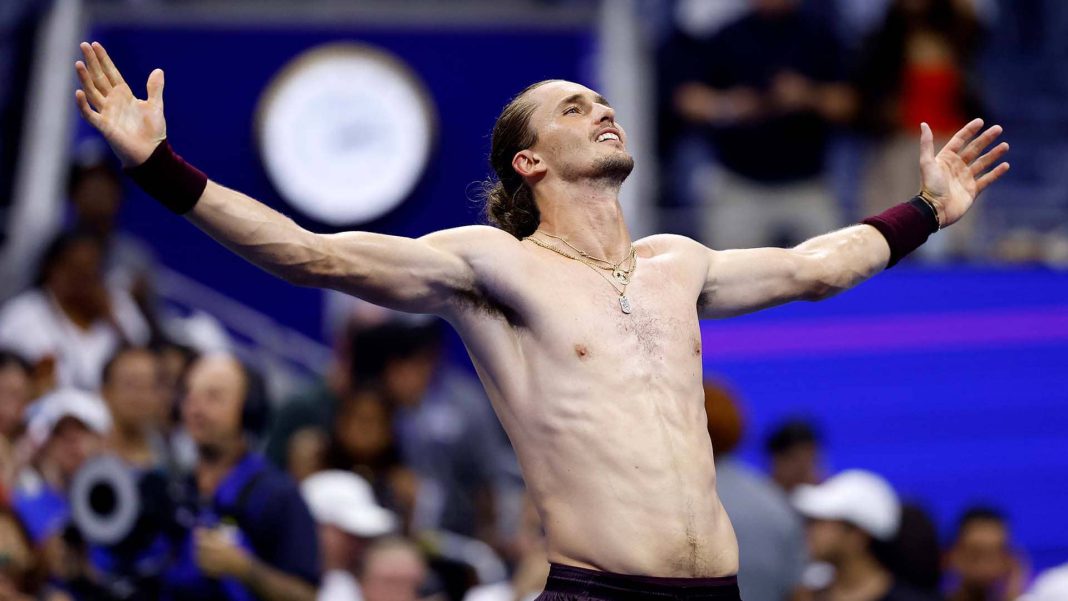


Alexander Zverev has navigated the most grueling opening week at this year’s US Open, surviving back‑to‑back five‑set marathons on Arthur Ashe Stadium to reach the Round of 16, but the real test begins now as fatigue meets the elevated intensity of week two. After laboring until 2:15 a.m. to outlast Quentin Halys 6‑4, 4‑6, 7‑6(3), 6‑7(3), 6‑3, the top seed admitted he is “physically quite strong” yet acknowledged he must raise his level to match his draw’s growing difficulty. With more than nine hours on court through two rounds, the question is whether his serve‑plus‑one dominance and return depth can hold up against fresher, high‑caliber opponents on Flushing Meadows’ fast hard courts.
Zverev’s path so far has been defined by endurance as much as execution. His first‑round battle against Lorenzo Sonego lasted nearly five hours and ended just before 2 a.m., exposing moments of vulnerability before his tactical grit secured a 6‑4, 3‑6, 6‑7(7), 7‑5, 6‑4 win. Against Halys, long stretches featured serve dominance from both players, with Zverev relying on big first serves and forehand heaviness to edge tight tiebreaks and a decisive fifth set. Statistically, his first‑serve percentage and points won on serve have remained elite, but return games have dipped slightly as rallies lengthen and legs heavy from late finishes. That trend matters in the Round of 16 and beyond, where opponents are more adept at punishing second serves and extending points to drain energy.
On the tactical front, Zverev’s blueprint remains clear: maximize free points on serve, dictate with the forehand down the line, and use deep, high returns to push opponents behind the baseline. Flushing Meadows rewards that approach when executed cleanly, but cumulative fatigue can blunt timing and reduce margin on aggressive shots. If his first‑serve percentage slips even a few points, he risks more deuce‑court pressure and longer return exchanges that sap stamina further. Recovery protocols—ice, compression, targeted physio—will be critical between matches, as will smart energy management during points to avoid unnecessary sprints.
While Zverev battles fatigue, American hopes are surging on the men’s side. Frances Tiafoe and Ben Shelton booked commanding third‑round wins, with Tiafoe easing past Valentin Vacherot 6‑4, 6‑2, 6‑4 and Shelton recovering from a second‑set wobble to defeat Denis Shapovalov 7‑6(3), 6‑7(5), 6‑3, 6‑4. Their relatively smoother passages contrast sharply with Zverev’s grind, giving them a potential physical edge if they meet deep in the tournament. Taylor Fritz, another American contender, headlines Saturday’s blockbuster schedule alongside Coco Gauff and Iga Świątek, underscoring the home crowd’s belief that a U.S. man could finally end the 23‑year Grand Slam title drought.
The women’s draw adds further intrigue to weekend play. Gauff and Świątek lead a star‑studded lineup on Arthur Ashe, where early finishes and controlled conditions can preserve energy better than the men’s late‑night slog. For Zverev, the challenge is twofold: maintain serve‑plus‑one efficiency while sharpening return depth to shorten points, and manage recovery so that week‑two intensity does not expose cumulative wear. His draw has opened favorably with several top contenders exiting, but physical freshness will ultimately decide whether he can convert opportunity into a first US Open title.