
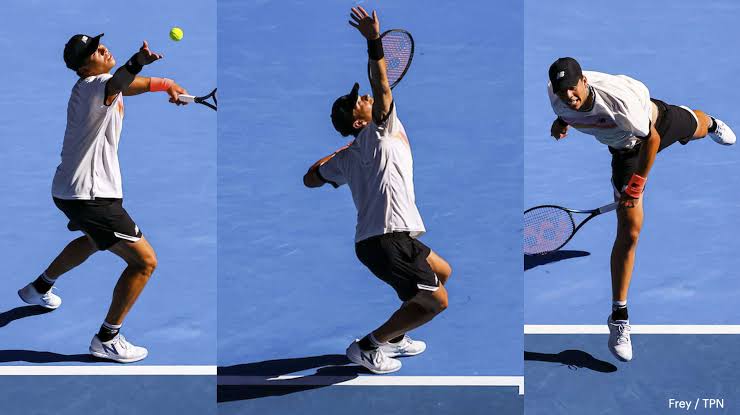


The business end of the US Open always separates players who look good on paper from players who can actually survive Flushing Meadows in September. Between the late-summer humidity, the day-into-night scheduling, and a hard court that punishes anyone not moving efficiently by week two, this tournament has a way of exposing physical cracks that don’t show up during the clay and grass swings. This year’s fortnight has been no exception, and the underlying data tells a more interesting story than the scorelines alone.
Start with the men’s draw, where the numbers back up what the eye test already suggested: this has been an unusually violent fortnight for the top seeds. Six of the top eight men’s seeds were eliminated before the tournament even reached its second week, a collapse rate far above the norm for a major. The headline moment came on day one, when the No. 4 seed’s 78-match first-round winning streak at Grand Slams ended in a five-set defeat that stretched past four and a half hours. That kind of match, decided in a final set that swung on fine margins, is exactly where conditioning data becomes predictive rather than just descriptive. Long, high-humidity five-setters early in a tournament tend to leave a physical bill that comes due in the second week, even for players who advance.
Contrast that with how the healthiest contenders have been managing their bodies through the same stretch. One semifinal-bound player’s dominant straight-sets performance included winning 84 percent of first-serve points while committing only 17 unforced errors, numbers that point to a player still moving efficiently and making decisions with a clear head deep into the tournament, rather than surviving on adrenaline. That efficiency matters more than raw firepower at this stage: when serve percentage holds steady while unforced errors trend downward as matches progress, it’s usually a sign that a player’s legs and decision-making are still in sync, a combination that tends to erode noticeably by the semifinal stage for players who’ve needed extra sets to get there.
The men’s draw has also produced a data point worth watching closely: an entire tiebreak escape in a quarterfinal, decided by the finest of margins at 8-7 in a ten-point breaker. Matches that come down to a single mistimed return or a well-placed ace under maximum pressure tend to hinge less on overall skill gap and more on which player’s serve reliability holds up after three-plus hours on court. That’s a stamina story disguised as a serve-speed story.
On the women’s side, break-point conversion has been the quieter but equally telling metric. Matches decided by one player converting break chances at a significantly higher clip than her opponent, even amid a high error count on both sides, usually reflect who is dictating rallies rather than just who is hitting harder. A returner who can extend rallies and force extra shots late in a match, when opponents’ legs and first-serve percentages typically decline, holds a disproportionate advantage as the tournament reaches its final rounds.
As the semifinals and final approach, the pattern is consistent across both draws: raw power gets players into the second week, but serve consistency under fatigue and break-point discipline in long rallies are what decide who’s still standing on the sport’s biggest closing weekend.