
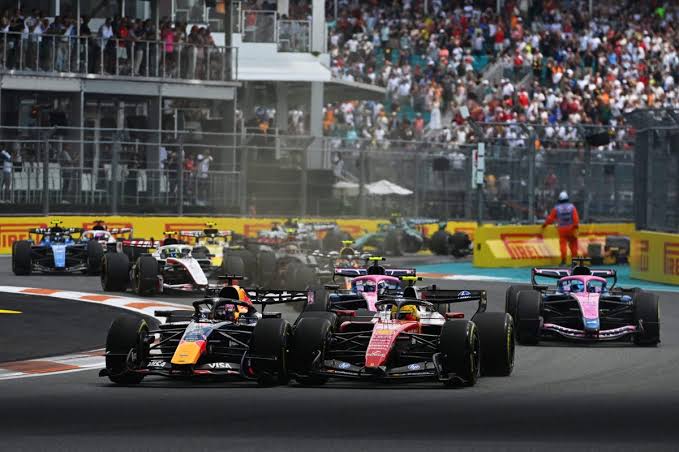


Formula 1’s post‑summer surge from Zandvoort to Monza is exposing two parallel battles: an arms race in low‑downforce aerodynamics at the “Temple of Speed,” and a strategic shuffle of power‑unit allocations and driver contracts that will echo into the 2027 grid.
At Monza, every team strips away drag to chase top‑speed efficiency, but the details of how they do it reveal their philosophy. Rear wings are trimmed to minimal flap angles, often running the thinnest allowable main plane with a narrow, low‑incidence upper element to reduce pressure drag while still generating enough downforce for the second Lesmo and Parabolica. Beam wings are similarly de‑loaded, with teams opting for shallow profiles that prioritize straight‑line speed over mechanical grip through slower corners. The goal is to maximize exit velocity onto the long straights, where DRS amplifies any small advantage in drag reduction.
This aero philosophy directly interacts with engine strategy. Mercedes has confirmed that championship leader Kimi Antonelli will start the Italian Grand Prix from the back of the grid after taking a full new power‑unit package, including a fifth ICE, fourth energy store, and fourth control electronics. The combined penalties exceed 15 grid places, automatically relegating him to the rear regardless of qualifying. Team principal Toto Wolff framed the move as a calculated sacrifice: absorb the hit at Monza, where overtaking is most feasible, to secure reliability for the run‑in.
Antonelli’s situation underscores how constructors are balancing immediate performance with long‑term planning. With multiple drivers facing potential engine penalties, teams are mapping out which races offer the best risk‑reward trade‑off for introducing fresh components. For Mercedes, the logic is clear: Monza’s long straights and multiple DRS zones give Antonelli a realistic chance to recover positions, whereas a penalty at a tighter circuit like Singapore or Suzuka would be far more damaging.
Beyond the technical chessboard, the driver market is creating its own ripple effects. Lando Norris has locked in a long‑term extension with McLaren through 2027, stabilizing one end of the grid while other seats remain fluid. Ferrari has reportedly secured Lewis Hamilton beyond 2026 with an option for 2027, while Charles Leclerc is tied down on a multi‑year deal. At Red Bull, Max Verstappen’s new contract runs to 2030, but the second seat is still open, influencing how the team allocates development resources between short‑term upgrades and 2027‑ready concepts.
These contract movements matter for chassis development trajectories. Teams with settled line‑ups can commit more aggressively to current‑year aero packages, knowing their drivers will be around to extract maximum value. Constructors still negotiating 2027 seats may hedge, preserving budget and wind‑tunnel time for next year’s regulation tweaks. The result is a split in development focus: some pushing hard on Monza‑specific upgrades to chase immediate wins, others conserving resources to ensure their 2027 car is competitive from the first test.
For fans, the Monza weekend will showcase how these technical and strategic layers intersect. Antonelli’s rear‑grid start is a live experiment in recovery driving with a low‑drag car, while the pit wall will be watching not just lap times but also tire wear and DRS efficiency under race conditions. Meanwhile, every contract announcement and engine allocation decision feeds into the larger narrative of who will be fighting for titles in 2027 and which teams have best managed the transition.
In short, the championship’s resumption is about more than one race result; it’s a stress test of aero concepts, power‑unit strategies, and long‑term planning that will define the next phase of the F1 hierarchy.