
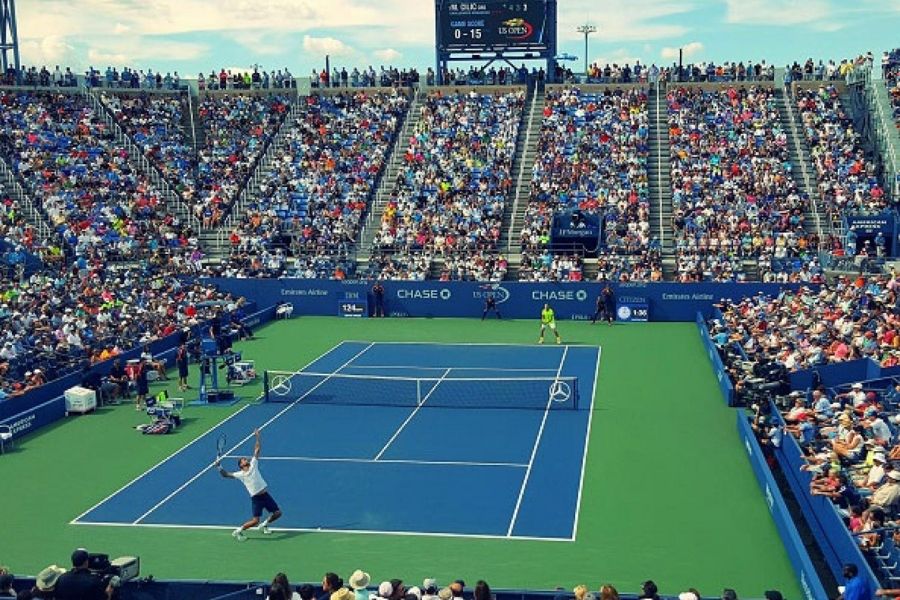


The move from Wimbledon’s grass to the North American hard courts is one of the most important shifts on the tennis calendar. It changes everything from bounce height to point construction, and the players who adapt fastest often gain the biggest edge heading into the US Open.
Grass and hard courts ask for very different skills. Grass tends to produce a low, skidding bounce and shorter rallies, which rewards first-strike tennis, quick reflexes, and strong serving. Hard courts are more neutral but usually play a little slower, so players have slightly more time to react, build points, and use a wider range of patterns. That means the same player who looks unstoppable in London may need to reset physically and tactically a few weeks later in Toronto, Cincinnati, or New York.
The biggest adjustment is often on serve return. On grass, returning is about survival as much as aggression because the ball comes through quickly and stays low. On hard courts, returners can take a bigger cut at second serves, stand a step closer, and create more pressure on service games. That shift can expose players who rely heavily on serve-plus-one patterns, while rewarding those who can defend and extend rallies.
Physical demands also change in a meaningful way. Grass rewards shorter movement bursts and efficient footwork, but hard courts require more repeated directional changes and longer baseline exchanges. That puts extra stress on legs, hips, and the lower back. Players coming off Wimbledon often have to rebuild their movement patterns, especially because hard courts demand better braking, balance, and recovery after each shot. It is not just a style change; it is a different workload for the body.
Certain playstyles tend to thrive in this part of the season. Big servers who can back up their serve with a solid forehand often do well because hard courts still reward free points. Aggressive baseliners also benefit because the surface gives them enough time to load up on groundstrokes without forcing them into clay-court patience. At the same time, elite counterpunchers can also shine if they absorb pace well and redirect the ball cleanly. The common thread is adaptability: players who can vary pace, take the ball early, and handle transition moments usually rise quickest.
For coaches, this stretch is about fine-tuning rather than overhauling. The goal is to keep the confidence from grass while adjusting spacing, shot selection, and recovery between points. A player who rushed the net on grass may need a different pattern on hard courts. Another who struggled against low bounce may suddenly find more rhythm from the baseline. The best teams use this window to sharpen the details that matter most under US Open pressure.
That is why the hard-court swing is such a fascinating part of the season. It tests whether a player’s success was surface-specific or built on broader skills. It also creates opportunities for those willing to adjust quickly. By the time the US Open arrives, the form guide often reflects not just talent, but who managed the grass-to-hard-court transition with the most intelligence.