
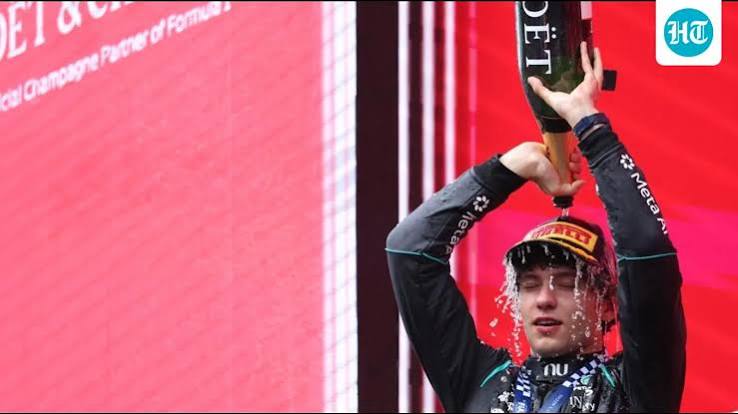


Kimi Antonelli’s Belgian Grand Prix win at Spa did more than add another victory to his 2026 tally; it underlined why Mercedes now looks like the team to beat in the championship fight. With George Russell retiring in costly fashion, Antonelli not only extended his lead but also delivered a performance that felt controlled rather than flashy, the kind of race that wins titles as much as highlight-reel overtakes do.
The key to Antonelli’s edge over Max Verstappen and the rest of the field was not one single moment, but the way Mercedes stitched the race together. Spa is always a game of margins, and Antonelli appeared strongest where it matters most: through the high-speed sections, on the straights, and in the final sector where energy deployment and traction out of the Bus Stop can make or break a lap. Reports from the weekend suggested that his Mercedes was visibly quicker in the deployment battle, allowing him to keep pressure on rivals and protect track position when it mattered.
Strategy also played its part. A good Spa race is rarely about raw speed alone; it is about choosing the right tyres, timing the pit stop correctly, and preserving pace through the opening phases without overheating the rubber. Antonelli’s team appeared to read the race better than most, and that efficiency mattered just as much as outright pace when the field spread out into its tactical layers. By the end, his victory looked less like a lucky break and more like the product of a driver and team operating in sync.
For Red Bull and Verstappen, Spa was a reminder that consistency under pressure remains the defining metric in a title fight. Verstappen may have stayed in the conversation, but Antonelli’s growing points advantage shows that Mercedes is turning good weekends into championship-defining ones. Russell’s retirement only widened the gap inside the title picture and gave Antonelli the kind of momentum that can change the tone of a season.
At the other end of the F1 story, Cadillac’s debut season is starting to look like something more nuanced than a simple success or failure. As the newest constructor on the grid, the American team entered 2026 with the advantage of experience in its driver line-up, and that has helped it avoid the kind of chaos that often greets new entrants. Early signs show solid reliability in several races, gradual progress in qualifying, and a willingness to finish races while learning on the move.
Still, the bigger picture is more sobering. Cadillac has yet to threaten the midfield regularly, and its results suggest a team that is building foundations rather than fighting for headlines. That is not a failure, especially for a debuting constructor, but it is also not proof that the project has solved Formula 1’s steep learning curve. The fact that Bottas and Perez have been focused on clean weekends, data collection, and incremental gains says a lot about where the team really stands.
Taken together, these two stories show the contrast at the heart of modern Formula 1. Antonelli and Mercedes are trying to turn execution into a championship, while Cadillac is trying to turn survival into progress. One team is racing for trophies; the other is racing for credibility.