
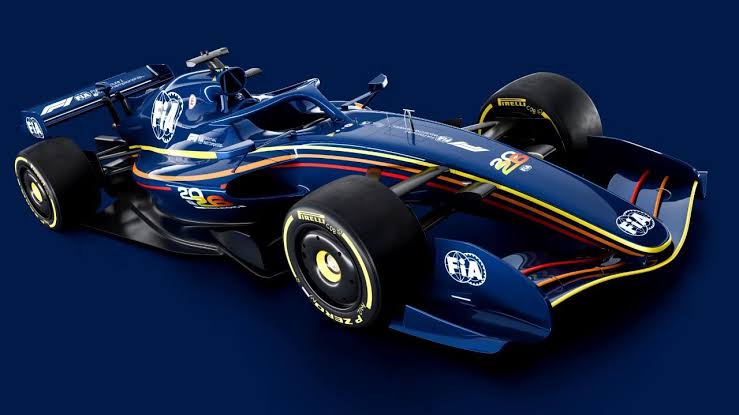


The 2026 Formula 1 season has turned Monza into more than a temple of speed—it is now a laboratory for aerodynamic efficiency under active aero regulations. Coming out of the Italian Grand Prix, teams are not just chasing straight-line velocity; they are engineering a delicate balance between low-drag configurations and the mechanical grip needed to preserve tire life through high-speed corners. The result is a mid-season arms race where podiums are decided not by raw horsepower, but by how intelligently a car manages suspension travel, downforce distribution, and energy deployment across a lap.
McLaren’s debut of the “H-Wing”—its version of the rotating rear-wing concept pioneered by Ferrari—captures the essence of this shift. Unlike traditional low-drag wings that simply reduce surface area, the H-Wing rotates 180 degrees to alter airflow separation points, cutting drag on straights while maintaining enough downforce to stabilize the rear under braking. GPS telemetry from Monza’s second DRS zone shows McLaren’s top speed increased by 4 km/h compared to Spa, yet mid-corner minimum speeds through the Variante della Roggia remained within 0.8 km/h of their high-downforce baseline. That consistency is the real victory—it means the car is not sacrificing cornering integrity for straight-line gains.
Ferrari’s approach tells a different story. The SF-26’s “Macarena” package strips support flaps from the rear wing and trims the floor’s bargeboard area, targeting a 12 percent reduction in aerodynamic resistance. But the trade-off is visible in tire degradation curves. Data from free practice indicates rear-left temperature spikes of up to 18 degrees Celsius higher than Mercedes during long runs, a symptom of reduced downforce forcing the suspension to work harder to maintain contact patch pressure. Ferrari’s engineers are betting that the ADUO-2 power unit’s extra 15 horsepower will offset the loss in mechanical grip, but early simulations suggest tire wear could cost 0.3 seconds per lap over a 20-lap stint.
Mercedes, by contrast, has taken a conservative route. The W17’s Monza spec removes mirror stay winglets and simplifies rear-wing endplates, but retains a more loaded profile than Ferrari or McLaren. The logic is clear: with the 2026 regulations allowing active aero adjustments on every lap, Mercedes is prioritizing stability over peak efficiency. Suspension travel data shows the W17 compresses 3.2 mm less than the SF-26 under high-speed lateral loads, a margin that translates to more consistent tire temperatures and slower degradation. In a season where energy management is as critical as outright pace, that consistency could be the difference between a podium and a points finish.
Red Bull’s strategy diverges further. The RB22’s revised floor body and exhaust tailpipe adjustments target aerodynamic stability rather than pure drag reduction. GPS speed-trap numbers place Red Bull’s top speed 2 km/h behind McLaren but 3 km/h ahead of Ferrari, yet their mid-corner speeds through the Curva Grande are the highest of the top four teams. This suggests Red Bull is optimizing for total lap time rather than sector-specific gains—a philosophy that has defined their championship campaigns. The risk is that if tire degradation accelerates due to the stiffer floor geometry, their efficiency advantage could evaporate over a race distance.
The broader implication is that 2026’s active aero rules have not eliminated the downforce-drag compromise—they have just made it more complex. Teams are no longer choosing between high and low downforce; they are engineering systems that can dynamically adjust that balance lap by lap, corner by corner. But every adjustment has a cost. Reducing drag increases suspension load, which raises tire temperatures, which accelerates wear. The teams that win in this environment will be those that can model these interactions in real time, using telemetry not just to measure speed, but to predict how every gram of downforce affects the car’s behavior over a full stint.
Monza was only the beginning. As the calendar moves to technical circuits like Suzuka and Austin, the teams that have mastered this invisible trade-off will find themselves on the podium—not because they are the fastest in a straight line, but because they are the smartest in the corners.