
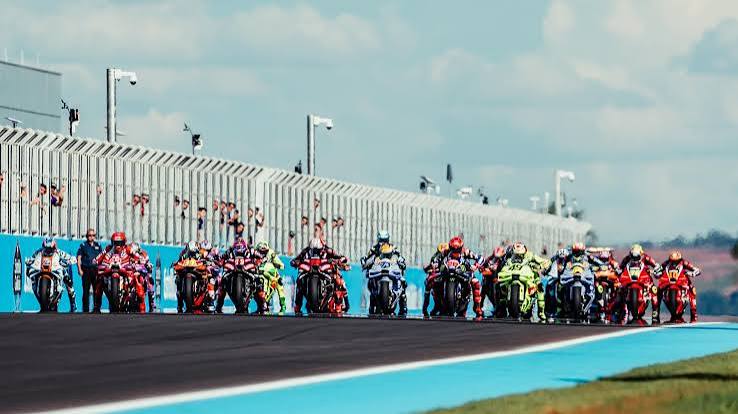


The era of passive sports viewing is ending. MotoGP Group’s newly announced partnership with Accenture to build a next-generation direct-to-fan OTT platform is more than a tech upgrade—it is a declaration that global rights holders are done waiting for cable and satellite distributors to dictate how fans consume live action. Set to launch in the 2027 season, the platform will unify MotoGP, Moto2, Moto3, and WorldSBK under a single architecture, offering synchronized multi-camera feeds, real-time telemetry, and customizable race coverage that legacy broadcasters simply cannot match.
This move reflects a broader shift in the sports-business landscape. In the US and UK, traditional rights packages have long been built on bulk distribution—selling entire seasons to networks that then bundle races into linear schedules with fixed commentary and camera angles. But as streaming penetration grows and younger audiences demand control over their viewing experience, rights holders are realizing that proprietary, low-latency platforms offer higher margins and deeper fan engagement. MotoGP’s bet is that fans will pay not just to watch, but to interact—with onboard audio, live data overlays, and the ability to switch between rider cams in real time.
The technology backbone, powered by Accenture Media Engage (formerly Accenture Video Solution), is designed for speed and flexibility. Unlike legacy systems that require months of integration for new features, this architecture allows MotoGP to roll out updates—like new camera angles or data visualizations—within weeks. For fans, that means a platform that evolves with their preferences, not one locked into a broadcaster’s production calendar.
Contrast this with the current state of cable sports rights. In the US, networks like NBC and ESPN still rely on multi-year deals that prioritize broad reach over niche engagement. A single MotoGP race might air on a secondary channel with limited promotion, while in the UK, TNT Sports holds exclusive rights but offers little beyond the standard broadcast feed. These deals generate revenue, but they cap upside—rights holders get a fixed fee, while platforms capture the value of subscriptions and advertising.
MotoGP’s new model flips that script. By going direct-to-fan, the series captures subscription revenue, data insights, and the ability to monetize premium features—like in-cockpit audio or interactive telemetry—separately. Early indicators suggest fans are willing to pay for this level of control. The existing MotoGP VideoPass, despite its technical limitations, has maintained a loyal subscriber base hungry for more granular access. The 2027 platform aims to convert that loyalty into a scalable, global product.
The implications extend beyond two wheels. Formula 1’s F1 TV, NASCAR’s NASCAR Drive, and even the UFC’s Fight Pass have experimented with similar features, but none have yet unified multiple series under a single, fully customizable interface. If MotoGP’s platform succeeds, it could pressure other rights holders to accelerate their own direct-to-consumer strategies—or risk being left behind as fans migrate to experiences that offer control, not just content.
For traditional broadcasters, the writing is on the wall. Linear TV’s sports monopoly was built on scarcity—few channels, fixed schedules, and no alternatives. But in a world where fans can choose their camera, hear their favorite rider’s team radio, and see live telemetry overlaid on their screen, the value of a passive broadcast feed diminishes. MotoGP’s Accenture-powered overhaul is not just about better streaming—it is about redefining who owns the fan relationship.