
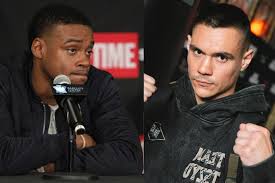


Errol Spence Jr.’s return to the ring against Tim Tszyu on July 25 in Australia is not just a comeback fight — it is a gamble with career-defining consequences. On paper, it is the kind of marquee matchup boxing fans want: a former unified welterweight champion stepping up to challenge one of the most punishing fighters at 154 pounds. In reality, it is a high-risk test of timing, durability, and ambition, with very little margin for error.
The biggest question hovering over Spence is ring rust. Elite fighters do not simply step away and return unchanged, especially after long layoffs and the kind of wear that comes from years at the highest level. Even if the body has healed and the training camp goes well, fight rhythm is a different thing entirely. Timing on the jab, reactions under pressure, and the instinct to reset after exchanges all sharpen only through real competition. Against a fighter like Tszyu, who is built to break rhythm and force exchanges, any hesitation could become costly.
What makes this return even more daring is the setting. Going to Australia to fight Tszyu means Spence is walking into an environment built around his opponent. That matters more than people sometimes admit. The crowd, the travel, the timing, and the psychological comfort all tilt in Tszyu’s favor. When a fighter is already dealing with uncertainty about his form, adding hostile territory only increases the degree of difficulty. Spence is not just fighting a talented boxer; he is fighting momentum, geography, and expectation.
Tszyu is a particularly dangerous opponent for a comeback because he brings pressure in layers. He is not a passive boxer waiting for mistakes. He presses, cuts the ring well, and throws with enough force to make every exchange feel meaningful. At 154 pounds, he is also naturally bigger than Spence, and that difference could matter if the fight becomes physical over the middle rounds. Power does not always scale upward in a clean way. A punch that hurt welterweights may not have the same effect against a stronger junior middleweight who absorbs shots differently and returns fire with more weight behind his own punches.
That is why Spence’s own power will be under the microscope. For years, his combination of precision and body attack made him one of boxing’s most difficult problems. If that version of Spence shows up, Tszyu will have real questions to answer. But if the return is marked by a slight drop in speed, a half-step slower reaction, or reduced punch volume, then the fight tilts sharply toward the Australian. In a matchup like this, power is not just about force; it is about whether it still arrives with enough timing and consistency to change momentum.
There is also a broader career issue at stake. Spence is at the point where every major fight becomes a statement about what remains of his elite status. A win over Tszyu would instantly reinsert him into serious championship conversations and prove he can compete above welterweight. A loss, especially one that exposes physical decline, would raise hard questions about whether the best version of Spence is already behind him.
That is what makes this fight so compelling. It is not simply a return. It is a dare. Spence has chosen a dangerous route back, in a hostile location, against a hard-hitting opponent who thrives on making elite fighters uncomfortable. If he wins, it will be one of the more impressive comeback statements in recent memory. If he loses, the risk will look even bigger in hindsight. Either way, this is not a safe comeback. It is a collision course.