
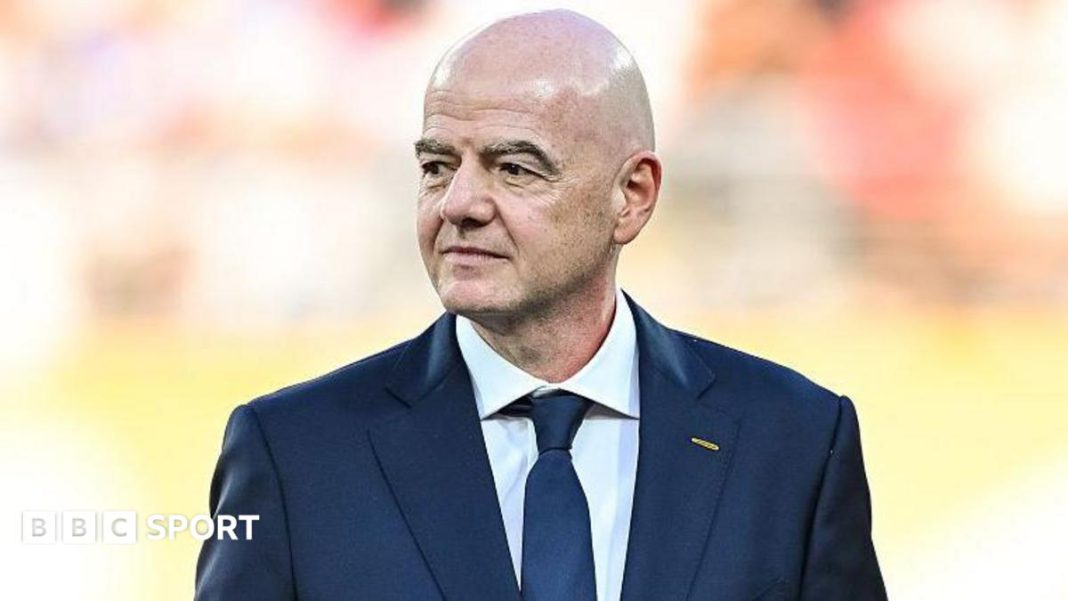


Gianni Infantino’s position as FIFA president appears increasingly vulnerable after UEFA, the Asian Football Confederation (AFC) and CONCACAF escalated their opposition and began discussing alternatives that could protect players and competitions from the growing institutional crisis. The coordinated pressure represents the most serious challenge of Infantino’s presidency and raises a fundamental question: can he remain in office when several powerful confederations no longer trust his leadership?
The immediate concern is the possibility of disruption to FIFA competitions. Preliminary discussions between UEFA, AFC and CONCACAF reportedly include the organisation of alternative tournaments if the dispute continues. One of the competitions potentially affected is the FIFA Women’s Under-20 World Cup, scheduled to begin on 5 September. France has indicated that it still intends to participate, but the uncertainty surrounding the tournament shows how quickly a leadership dispute at the top can affect players and national teams.
The crisis began after Infantino’s controversial proposal to bring private investment into FIFA competitions. The plan, which reportedly involved selling stakes in major tournaments, triggered widespread criticism from football authorities and stakeholders. Although the proposal was later withdrawn and Infantino apologised for what he described as errors, the damage to his credibility appears to have gone far beyond the original scheme.
For UEFA, the issue is no longer limited to one failed commercial idea. European football’s governing body has openly questioned FIFA’s decision-making process and stated that it has lost confidence in Infantino’s leadership. CONCACAF has also called for a comprehensive review of the FIFA presidency, while the AFC has argued that the controversy exposed deeper weaknesses in consultation and governance.
That is why the latest message from the three confederations is so significant. They are not merely demanding that one proposal be abandoned; they are challenging the way FIFA is being governed. By joining forces, UEFA, AFC and CONCACAF have created a broad coalition representing a substantial portion of the global football community. Their call gives Infantino an opportunity to resign before the situation develops into an open institutional confrontation.
Infantino’s supporters may argue that he still has formal authority and that the investment plan has already been cancelled. They may also point to FIFA’s expanding commercial revenues and global reach during his tenure. However, political survival in football depends not only on financial results but also on trust among national associations and confederations. Once that trust has been seriously damaged, an apology may not be enough to restore it.
The next major test will be the FIFA presidential election scheduled for March 2027. Reports indicate that European associations are considering withdrawing their earlier support for Infantino, while opposition within CONCACAF and other parts of FIFA’s structure is also growing. If the current pressure continues, the election could become less a contest for re-election and more a referendum on Infantino’s leadership.
The choice before Infantino is becoming increasingly narrow. He can fight to remain in power and risk further boycotts, fractured competitions and prolonged instability, or step aside and allow FIFA to begin rebuilding its credibility. For the sake of players, supporters and the integrity of international football, change may now be unavoidable. Whether that change comes through resignation or an election defeat, Infantino’s era appears to be approaching its defining moment.