
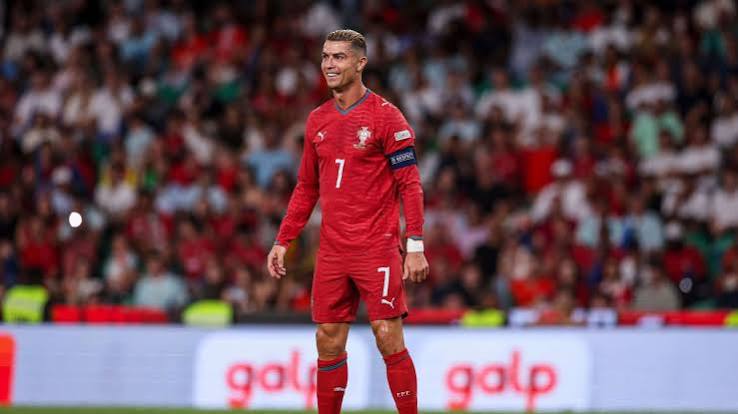


Cristiano Ronaldo’s abrupt departure from Portugal’s UEFA Nations League camp has created uncertainty around the team’s leadership, selection policy and tactical direction. The episode is not only about one player being left out of a starting lineup. It reflects a wider challenge facing Portugal: how to balance the influence of an iconic veteran with a new football model that demands constant pressing, mobility and collective defensive responsibility.
The controversy developed after Ronaldo was left on the bench during Portugal’s Nations League victory over Norway. Head coach Jorge Jesus had reportedly indicated that the forward could feature during the match, but the substitution never arrived. Ronaldo was then informed that he was unlikely to start against Denmark, after which he left the national-team camp in Copenhagen.
Ronaldo later confirmed his exit and suggested that the full explanation would emerge at a later stage. Jesus, meanwhile, rejected the idea of a serious rift and maintained that selection decisions belonged to the coach. The Portuguese Football Federation also became involved as it attempted to manage the situation, but the public disagreement has placed additional pressure on a team already adjusting to a new coaching era.
The tactical background is important. Portugal’s modern squad contains several players capable of defending aggressively from the front. Rafael Leão, Diogo Jota, Gonçalo Ramos and other attacking options can press centre-backs, chase full-backs and immediately counter-press after losing possession. That approach requires repeated high-intensity movements rather than isolated moments of brilliance.
Ronaldo remains one of football’s most accomplished finishers, but his role has naturally changed with age. At 41, he is more valuable when positioned close to goal, where his movement inside the penalty area, aerial ability and finishing instincts can decide matches. He is less suited to covering large defensive distances or leading an uninterrupted press for 90 minutes. The tactical question is therefore not whether he can still score, but whether Portugal can construct its pressing structure around his limitations.
One possible solution is to use Ronaldo as a controlled attacking weapon. Portugal could begin with a more mobile forward line and introduce him when the match becomes stretched, when opponents are tiring or when the team needs a reliable penalty-box presence. Another option is to deploy him centrally with two energetic wide players responsible for initiating the press. Both approaches require clear communication, because uncertainty over roles can damage the balance of the entire attack.
For Jesus, the challenge is particularly sensitive because of his previous working relationship with Ronaldo at Al Nassr. That familiarity may have created expectations about trust and influence, while the coach’s new position requires him to establish authority across the squad. Leaving a legendary captain out of the starting XI is never a routine decision, especially when the player remains a major figure for supporters and teammates.
Portugal’s next phase will depend on whether the situation becomes a distraction or a turning point. The squad has enough technical quality to evolve beyond a Ronaldo-centred system, but removing him without a carefully defined plan could also weaken its finishing threat. The ideal transition would not be based on status or sentiment. It would be built around roles that allow Portugal to press effectively while still benefiting from Ronaldo’s instinct inside the box.
The latest crisis has therefore exposed a fundamental question for the national team: should its system adapt to its greatest scorer, or should every player serve the system equally? Portugal’s answer could shape not only the remainder of the Nations League campaign but also the final international chapter of Ronaldo’s extraordinary career.