
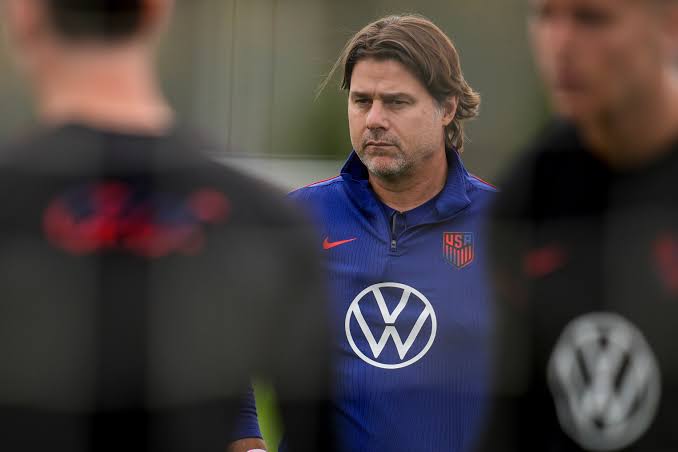


Mauricio Pochettino’s move from the United States Men’s National Team to Manchester United is one of the most dramatic managerial shifts of the season. He leaves a project built around the 2030 World Cup to inherit a club in crisis, where results, confidence and dressing-room culture all need urgent repair.
Manchester United appointed Pochettino as head coach after dismissing Michael Carrick following the club’s worst Premier League start in 40 years. United had collected just eight points from their opening 10 league matches and sat 18th in the table, with only three wins from 15 matches in all competitions.
A painful USMNT exit
Pochettino’s departure is especially significant because it comes only months after he signed an extension to lead the USMNT through the 2030 World Cup. He had taken charge in 2024 and guided the United States to the round of 16 at the 2026 World Cup, but United triggered a reported $10 million release clause to bring him to Old Trafford.
The Argentine coach described the decision as one of the most difficult of his career, and he will remain with the USMNT for their Concacaf Nations League quarter-final fixtures against Haiti before officially taking over at United on November 18. His exit leaves U.S. Soccer with an immediate leadership vacuum at a sensitive moment, with the next World Cup cycle still years away but the foundations of squad identity and tactical continuity now unsettled.
For the USMNT, the challenge is not only finding a replacement. It is preserving the standards, structure and belief Pochettino established in a short but productive tenure. A new coach will need to win over a squad that had begun building around his ideas, while also managing the political and sporting expectations that come with preparing for a home-region World Cup in 2030.
United’s culture problem
Pochettino’s first task at Manchester United will not simply be tactical. The club’s recurring issue has been instability: Carrick became the seventh permanent manager dismissed since Sir Alex Ferguson retired in 2013, and Pochettino is now the eighth permanent appointment in that period.
United need a manager who can restore accountability without losing the dressing room. Pochettino’s reputation for building cohesive teams, developing players and creating an intense, attacking style fits the club’s stated needs, but Old Trafford is a uniquely demanding environment. He must quickly decide which players can be trusted, which tactics suit the available squad, and how to stop a season from slipping into a full-blown relegation battle.
His debut could not be more demanding: United travel to Liverpool on November 22, four days after he formally takes charge. That fixture will offer an immediate measure of whether he can stabilise a team short on confidence and consistency.
What his Premier League record suggests
Pochettino’s previous Premier League work offers both encouragement and caution. At Tottenham, he transformed the club into a consistent top-four side and reached the 2019 Champions League final, proving he can build a competitive team over time. At Chelsea, however, his spell showed the difficulty of managing a squad in transition, where expectations, recruitment and internal pressure can complicate even a capable coach’s plans.
That contrast is exactly why United’s decision is fascinating. Pochettino has the experience to organise a fractured squad, but he is arriving at a club where patience has been scarce and every poor result becomes a referendum on the manager. His success may depend less on tactical innovation than on whether he can create clarity, discipline and belief quickly.
For now, United have chosen experience over experimentation. Pochettino has left a national-team project to answer football’s toughest club-level question: can Manchester United finally become stable again?