
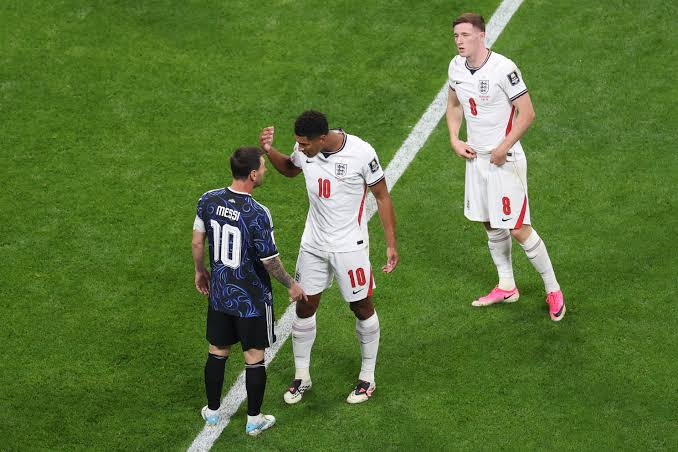


The FIFA World Cup 2026 semifinal between Argentina and England delivered everything fans expect from a clash of global heavyweights—intensity, controversy, and late drama. Argentina’s 2-1 comeback victory in Atlanta sealed their place in the final, but the spotlight quickly shifted to a heated on-field exchange between Jude Bellingham and Lionel Messi that sparked widespread debate online.
The match itself was fiercely contested from the outset, with both sides engaged in a physical battle that saw a total of 26 fouls committed over 90 minutes. England players grew increasingly frustrated with what they perceived as lenient refereeing toward Argentina’s midfield challenges, leading to repeated protests and rising tension on the pitch.
In the midst of this charged atmosphere, cameras captured a moment between England’s midfield star Jude Bellingham and Argentina captain Lionel Messi. The two were seen in a close, animated discussion, with Bellingham appearing expressive and slightly amused, while Messi responded with a composed and dismissive demeanor. The brief interaction quickly became one of the most talked-about incidents of the match.
Soon after the final whistle, social media platforms were flooded with claims about what was allegedly said during that exchange. A viral post falsely attributed controversial remarks to Bellingham, suggesting he questioned Messi’s success and even compared him unfavorably to Cristiano Ronaldo. However, these claims were entirely unfounded.
The source of the quote was a known satire account that openly labels its content as fictional. Despite this, the fabricated statements spread rapidly, misleading fans and fueling unnecessary controversy. No verified broadcast audio, official transcripts, or credible media reports supported these allegations, confirming that the viral claims were baseless.
Bellingham himself addressed the situation in the post-match press conference, offering clarity and downplaying any notion of conflict. According to the England midfielder, the exchange was simply a discussion about a foul during the game. He explained that both players were debating decisions made on the pitch, with no hostility involved.
Bellingham also emphasized his admiration for Messi, describing it as an honor to compete against one of football’s greatest players. His comments reflected mutual respect rather than rivalry, reinforcing that the incident was a routine piece of competitive dialogue rather than a personal confrontation.
While the Messi-Bellingham moment was largely harmless, emotions did spill over after the final whistle. Reports and footage showed Bellingham involved in a brief altercation with Argentina substitute Valentín Barco. The situation escalated quickly, with Bellingham appearing to strike Barco on the back of the head before players and staff intervened to defuse tensions.
Such incidents are not uncommon in high-stakes matches, particularly when elimination from a World Cup is at stake. England’s late collapse only added to the emotional weight of the moment, as Argentina capitalized on their chances to complete a dramatic turnaround.
In the end, while Argentina celebrated a famous victory, the controversy surrounding Bellingham and Messi serves as a reminder of how quickly misinformation can spread in the digital age. What was merely a competitive exchange between two elite players was transformed into a viral narrative that had little grounding in reality.