
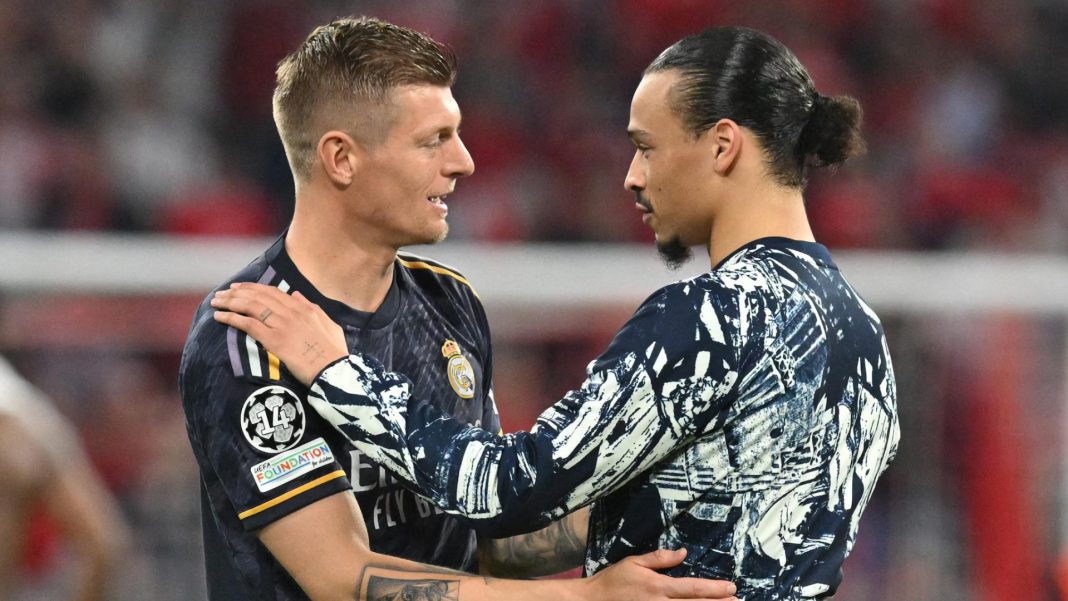


The expanded Champions League league phase was designed to create more high-stakes matches, and its early rounds have already delivered the intended chaos. Club Brugge’s 4-3 win at Inter Milan, Viking FK’s 3-3 draw with Bayern Munich and Bodø/Glimt’s 1-0 victory over Borussia Dortmund have shown that Europe’s smaller clubs are no longer simply surviving against elite opposition—they are actively disrupting it.
Much of that disruption comes from the rise of compact mid-block structures. Rather than pressing high and leaving space behind, underdogs are sitting in a disciplined band across the middle third, forcing elite teams to play through crowded central areas or recycle possession into wider, less dangerous zones.
This approach is particularly effective against possession-dominant giants. Bayern Munich discovered that against Viking, falling 2-0 behind before recovering to lead, only for Herman Haugen’s stoppage-time header to secure a 3-3 draw. Viking’s willingness to defend deep, break quickly and make the game emotionally chaotic prevented Bayern from imposing a controlled rhythm.
Club Brugge offered a different version of the same problem. Instead of merely absorbing pressure, they attacked Inter directly and won 4-3 at San Siro, with Nicolo Tresoldi scoring a hat-trick. Their performance showed that a mid-block does not have to mean passive football; it can become a platform for quick vertical attacks once opponents commit numbers forward.
The expanded format magnifies these risks. With 36 teams playing eight league-phase matches rather than the old six-game group stage, elite clubs face more varied opponents, longer travel and fewer opportunities to reset after a poor result. A single dropped point now carries greater weight because qualification for the knockout rounds depends on league-table position rather than a smaller group calculation.
Mid-blocks also exploit a tactical weakness among some of Europe’s biggest sides: their reliance on structured build-up patterns. When a team such as Bayern, Inter or Manchester City dominates the ball, opponents can predict passing lanes and compress the spaces between defence and midfield. The result is fewer clean entries into the final third, more forced crosses and more transitions for the underdog to attack.
Viking’s draw was especially instructive. They led 2-0 at half-time, absorbed Bayern’s response after Harry Kane’s two goals and then capitalised when Michael Olise was sent off for throwing the ball at Zlatko Tripić. Their late equaliser was not just a moment of fortune; it reflected a team that stayed organised, competitive and psychologically engaged until the final whistle.
For the giants, the answer is not simply more possession. They need better rest defence, quicker counter-pressing and more unpredictable movement in the final third. If the first line of pressure is bypassed, the midfield must immediately protect the space behind it; otherwise, a disciplined mid-block will keep forcing turnovers and transitions.
The early evidence suggests the Champions League’s new format has reduced the margin for tactical complacency. Club Brugge have already produced a 3-2 defeat to Aston Villa and a 4-3 win over Inter, while Viking have turned their debut campaign into a statement of competitive intent. If Europe’s elite continue to underestimate compact, transition-heavy opponents, more upsets are likely before the league phase concludes on January 27.