
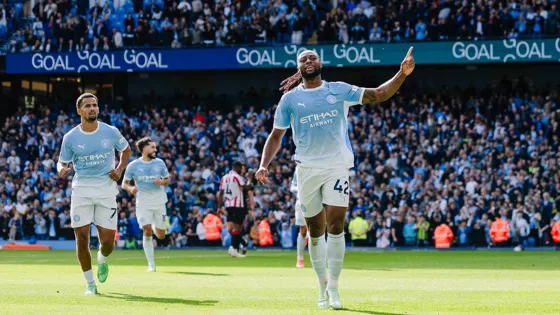


Gameweek 5 of the 2026–27 Premier League delivered two contrasting but equally revealing storylines: Manchester City topping the table after an 5–3 Etihad thriller against Sunderland, and Brighton dismantling Arsenal 3–0 at the Amex to become the division’s most prolific side with 16 goals in five games. Beyond the scorelines, the results raise urgent questions about City’s defensive high line under Enzo Maresca and underline how Brighton’s structured transitions are now a genuine “big-six” problem.
City’s eight-goal spectacle against Sunderland showcased their attacking depth but also exposed vulnerabilities that aggressive pressing units can exploit. Despite dominating possession, City conceded three goals to a side that outshot them 17–16, landed more shots on target (9–6) and posted a higher expected goals tally (4.15 vs 2.72), according to performance data. Sunderland’s approach, built around a high press and direct balls into Brian Brobbey, repeatedly punished City’s back line when the first line of pressure was bypassed.
Brobbey’s away hat-trick—only the fourth in Premier League history against the team starting the day top of the table—was the clearest indictment of City’s current defensive setup. He bullied Ruben Dias physically, held up long balls effectively and turned quickly to face a high line that often left minimal recovery space. Positional issues at right-back, where Matheus Nunes struggled both defensively and in possession, compounded the problem, while Josko Gvardiol was far from his best in one-on-one situations. Maresca admitted after the match that he would “prefer to win 1–0 than 5–3”, acknowledging that Sunderland’s aggression and variety of weapons made the game “very difficult” despite the final score.
The broader concern is whether City’s high-risk, high-reward model is sustainable over a full season. Maresca’s system relies on compressing play, winning the ball high and creating quick chances, but it also leaves huge spaces behind the full-backs and centre-backs when the press is beaten. Against Sunderland, every misplaced pass or delayed trigger in the press led to immediate vertical threats, with Brobbey and supporting runners exploiting the gap between defence and goalkeeper. As the campaign progresses, better-coached pressing teams and elite counters will test whether City can tighten their defensive transitions without sacrificing attacking fluency.
Brighton, by contrast, offered a masterclass in how to neutralise a top side through structure and speed. Their 3–0 win over Arsenal ended the Gunners’ perfect start and highlighted a recurring theme: Brighton’s ability to sit in a compact mid-block, force play wide, then explode into transition with precise spacing and vertical passes. Arsenal, who had looked so controlled in earlier weeks, were repeatedly caught between pressing and dropping, leaving channels open for Brighton’s forwards to attack in behind.
Brighton’s blueprint against the “big six” is now well established: absorb pressure, stay disciplined without the ball, and use rapid, coordinated counters to punish disorganised defences. Their 16 goals in five games—the highest total at this stage since Manchester City’s 19 in 2022–23—reflect not just individual quality but a system that consistently creates high-value chances. Against Arsenal, they combined wide overloads with quick switches and direct runs, ensuring that every turnover had the potential to become a goal-scoring opportunity.
Taken together, these results frame the early title narrative. City have the firepower to outscore most opponents, but their defensive high line is a clear target for well-drilled pressing and counter-attacking sides. Brighton, meanwhile, have evolved from giant-killers to genuine top-four contenders, with a tactical identity that consistently unsettles elite defences. As the season progresses, the teams that can either fix their transitional fragilities or replicate Brighton’s counter model will define the race at both ends of the table.