


Formula 1’s 2026 season has turned aerodynamic development into a delicate balancing act. With active front and rear wings, narrower tyres and a major reduction in floor-generated downforce, teams are searching for lap time without creating excessive drag or accelerating tyre degradation.
As the championship moves towards the autumn races in Baku, Singapore and Austin, the midfield battle could be shaped less by headline upgrade numbers and more by how effectively each car manages its aerodynamic compromises. A new rear wing may deliver extra speed on a long straight, but the same reduction in loading can make the car unstable through high-speed corners and force the driver to work the tyres harder.
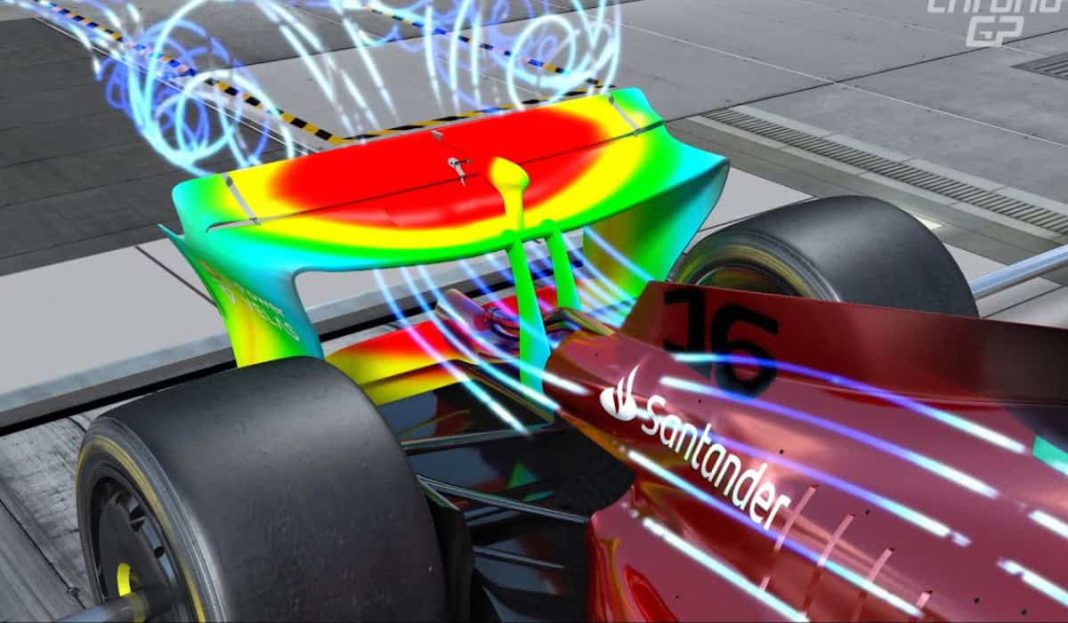
The rear wing remains one of the most visible areas of development. In low-drag trim, its open configuration allows cars to reach higher speeds while using less energy on the straights. However, the wing must still provide enough stability when the car enters a braking zone or changes direction. The challenge is particularly severe under the 2026 regulations, which allow the wings to move between straight-line and cornering modes rather than relying on the previous DRS system.
A rear-wing upgrade therefore cannot be judged only by the speed gained at the end of a straight. Engineers must also examine how the revised airflow interacts with the diffuser, rear suspension and floor. If the rear of the car becomes too light in fast corners, the driver may compensate with steering corrections. Those corrections create additional sliding, and sliding generates heat in the tyre surface. The result can be a faster qualifying lap but a less competitive race stint.
The floor edge presents a different but equally important battleground. Small contours and vortex-generating features near the floor can help control the airflow moving towards the rear of the car. Their purpose is to protect the quality of the flow and maintain a predictable pressure difference beneath the chassis. In 2026, however, teams are working with a flatter floor concept and a smaller aerodynamic platform than the ground-effect cars used from 2022 to 2025.
That makes consistency extremely valuable. A floor that produces impressive peak downforce but loses performance when the car pitches, rolls or rides over a kerb may be less useful than a package with slightly lower maximum load and a wider operating window. For midfield teams, this stability can be the difference between protecting the tyres and falling into a damaging cycle of overheating.
Each upcoming circuit places a different demand on the compromise. Baku rewards low drag because of its long full-throttle section, but its slow corners require traction and rear-end confidence. Singapore reverses the priority: maximum grip, strong rotation and predictable braking performance matter more than outright top speed. Austin combines long straights with fast directional changes, making it a demanding test of whether an upgrade works across multiple aerodynamic conditions.
Recent development trends show teams targeting both drag reduction and improved aerodynamic efficiency. McLaren, for example, introduced a revised rear wing and floor-related changes at Monza, with the package designed to reduce drag while maintaining performance. Ferrari has also been linked with floor and diffuser revisions aimed at improving its efficiency through the Baku-to-Austin phase of the calendar.
For the midfield, the most successful upgrade will not necessarily be the one that produces the biggest wind-tunnel figure. It will be the package that lets drivers attack kerbs, protect the rear tyres and switch between low-drag and high-downforce demands without upsetting the car’s balance. In a season defined by technical change, aerodynamic efficiency may ultimately matter more than maximum downforce.