
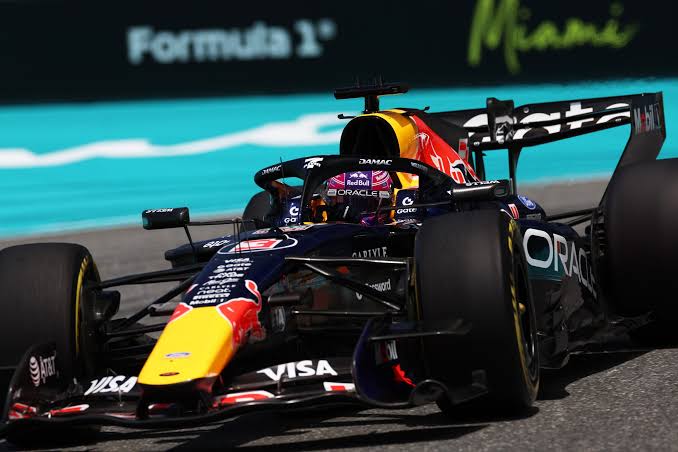


The 2026 constructors’ championship has evolved into a technical stalemate between Red Bull, McLaren, Ferrari, and Mercedes, with aerodynamic parity now so fine that mid-season upgrades and tyre management are deciding races more than raw car concept. At the inaugural Spanish Grand Prix on Madrid’s new Madring street circuit, each of the top four teams arrived with targeted revisions to floors, rear bodywork, and wing elements, aiming to extract marginal gains in downforce while controlling degradation over a lap that punishes the left-hand tyres.
Mercedes brought the most visible package, introducing three updates to the W17. Two were circuit-specific: narrowing the central rear-wing winglet to trim drag, and adding an extra winglet behind the exhaust to improve flow conditioning and generate local load. A third change reshaped the brake-drum leading edge to keep airflow attached through high steering angles, feeding cleaner air to the rear diffuser. The goal was to optimise the downforce-to-drag ratio for Madrid’s mix of long straights and a banked, high-speed Turn 12 that loads the left-side tyres heavily.
Red Bull’s focus was more about reliability and floor robustness than outright performance. The RB22 received an altered rear wheel bodywork assembly to restore aerodynamic load lost in recent races, plus a geometric tweak to the floor bib to reduce structural strain and prevent deformation under high downforce. With the three-element floorboard reintroduced after Zandvoort, Red Bull is trying to stabilise platform behaviour so Verstappen and Hadjar can attack without worrying about floor damage or unpredictable ride-height sensitivity.
Ferrari and McLaren opted for smaller, precision updates. Ferrari reprofiled the fairing around the rear upper control arm of the suspension to gain localised load, while McLaren added rear-wing furniture to improve flow onto the mainplane and flap. McLaren framed the change as a pure performance step rather than circuit-specific, suggesting they see it carrying through to upcoming high-speed venues where rear-end stability is critical.
Tyre degradation has emerged as the great equaliser. Pirelli reported significant graining and thermal degradation on the front-left and rear-left tyres in Madrid, driven by higher-than-expected grip levels and a smooth surface that increases sliding energy. The long, banked Turn 12 exacerbates this, forcing teams to balance aggressive aero loads against tyre life. George Russell highlighted degradation as a key factor after practice, noting that managing temperatures and wear would be as important as raw pace in the race. For the top teams, the car that degrades its tyres least over a stint can offset a small qualifying deficit, turning tyre management into a strategic weapon.
This technical convergence has direct implications for the driver market. With car performance so closely matched, teams are placing greater value on drivers who can extract consistent lap times while preserving tyres and executing complex strategies. Uncertainty around seats at Red Bull, Aston Martin, Williams, Alpine, and Racing Bulls means that 2027 negotiations are increasingly focused on who can maximise a car’s window of operation rather than who produces the occasional spectacular lap. Max Verstappen and Fernando Alonso hold significant leverage; their decisions will ripple through the grid, but even they now operate in an environment where mid-season upgrades and tyre windows can swing the competitive order from race to race.
As the season moves toward its final third, the constructors’ battle is less about one team having a clearly superior car and more about who upgrades most effectively and manages degradation best on high-speed circuits. In that context, every floor tweak, winglet adjustment, and tyre-preservation trick becomes a potential championship pivot point, keeping the fight between Red Bull, McLaren, Ferrari, and Mercedes razor-close until the last round.