
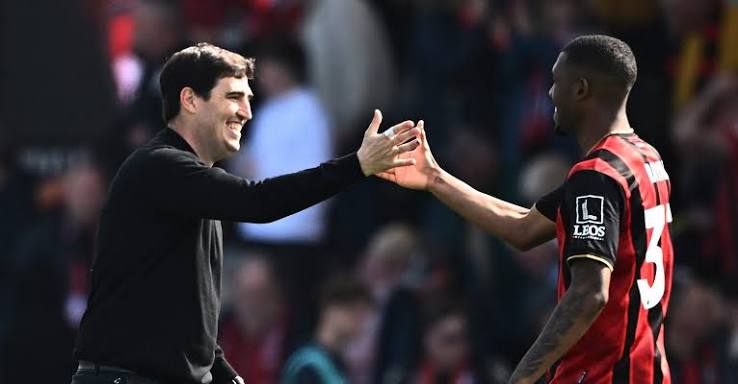


AFC Bournemouth’s 2–1 victory over Real Sociedad was more than a historic first European win; it was a statement about how modern mid-table Premier League clubs can compete immediately against continental stalwarts. At the Reale Seguros Stadium in San Sebastián, Marco Rose’s side did not park the bus or pray for counters. They pressed with ferocity, turned possession into chances, and used intensity as their great equaliser against a La Liga regular.
The Cherries led 2–0 at half-time thanks to first-half goals from Justin Kluivert and Rayan, both born from aggressive high pressing and quick transitions. Kluivert’s 11th-minute strike came after Bournemouth forced turnovers in advanced areas, while Rayan’s 20th-minute header underlined their willingness to attack spaces behind full-backs the moment possession was won. Even when Real Sociedad improved after the break and pulled one back through Sergio Gómez in the 57th minute, Bournemouth’s structure and work rate allowed them to hold on for a famous result on their European debut.
This performance fits a broader pattern in which Premier League clubs outside the traditional “big six” have used high-intensity pressing to punch above their weight in UEFA competitions. The league’s domestic demands—faster tempo, more duels, relentless transitions—have conditioned teams like Bournemouth to treat European nights as extensions of their weekly rhythm rather than exotic one-offs. Against technically refined opponents such as Real Sociedad, the logic is simple: disrupt their build-up, compress the pitch, and turn the game into a series of second balls and transitional moments where athleticism and organisation matter more than pedigree.
Bournemouth’s approach under Rose mirrors tactics seen from other recent European debutants from England’s mid-table: a coordinated press triggered by specific passing lanes, vertical runs to stretch compact defences, and an acceptance that conceding some possession is worth the chance to create higher-quality chances. The payoff is visible in the scoreline and the match narrative. Sociedad enjoyed more of the ball but were repeatedly punished for errors under pressure, while Bournemouth’s goals came from the exact scenarios their game plan was designed to manufacture.
The significance extends beyond one away win. For clubs like Bournemouth, European qualification is no longer a fantasy reserved for top-four finishes; it is an attainable target via league position or domestic cups. The challenge has always been whether squads built for domestic survival can adapt quickly to continental opposition. This match suggests that a well-drilled, high-pressing system can bridge that gap almost immediately, provided the players buy into the physical and tactical demands.
Marco Rose’s post-match comments captured the essence of the performance. He spoke proudly of “Bournemouth football” and highlighted how the team’s identity—relentless pressing, quick verticality, and collective defending—translated seamlessly to the European stage. In his view, the victory was not a fluke but the logical outcome of a season’s worth of training-ground work now tested against a respected Spanish side.
For European football, Bournemouth’s success adds another layer to the evolving competitive landscape. The old hierarchy, where mid-table Premier League teams were expected to learn their place in Europe, is being challenged by sides that treat continental fixtures as another arena for their domestic style. If more clubs follow this blueprint, UEFA competitions could see an increase in volatile, high-tempo fixtures where reputation counts for less than intensity and organisation.
On a night when Bournemouth wrote their first European chapter, the broader message was clear: in the modern game, pressing is the great leveller, and mid-table is no longer a barrier to making noise on the main stage.