
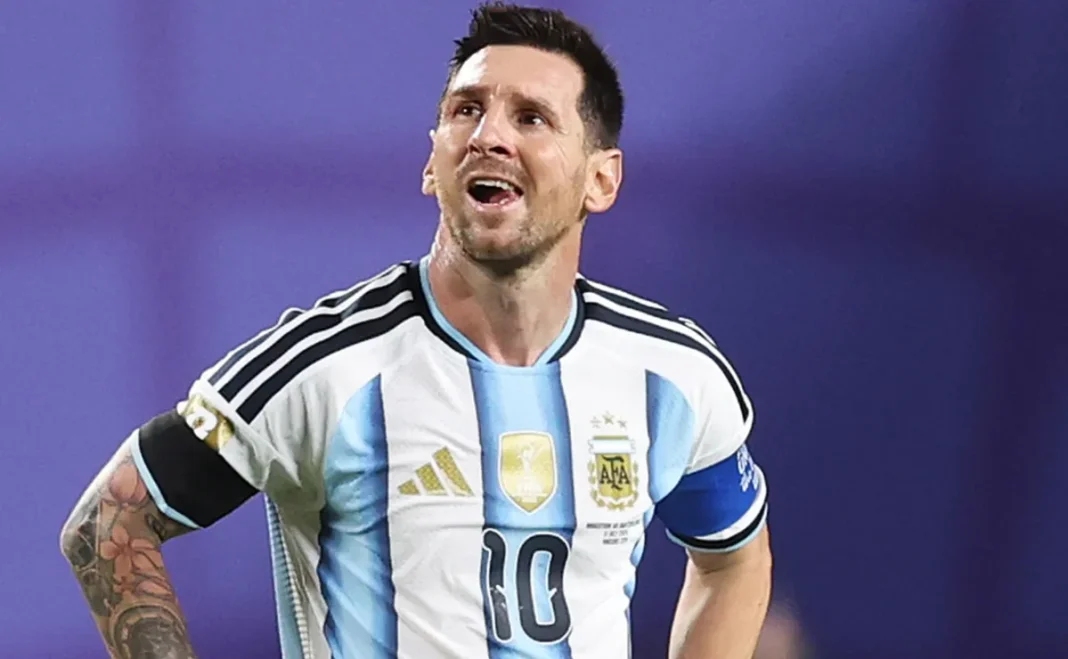


Lionel Messi has officially retired from international football, bringing an extraordinary Argentina career to a close after more than two decades in the sky-blue and white shirt. The 39-year-old leaves as Argentina’s most-capped player and all-time leading scorer, with 207 appearances and 125 goals, while continuing his club career with Inter Miami in Major League Soccer.
Messi confirmed the decision through an emotional social-media statement after Argentina’s defeat to Spain in the 2026 FIFA World Cup final. His final international appearance came in that championship match, ending a sixth World Cup campaign and closing the most celebrated chapter of his career. The announcement was not an impulsive one. Messi revealed that he had written the farewell message on July 21, two days after the final, but delayed making it public as his father, Jorge Messi, was dealing with health issues. Jorge Messi’s death on August 8 ultimately reinforced the decision to step away from the national side.
In his message, Messi made clear that the moment had arrived despite the pain attached to it. He said he had given everything possible to Argentina and acknowledged that a new generation of players deserved its chance to take responsibility for the team’s future. Those words reflect a familiar theme from the latter stages of his career: Messi’s desire to leave Argentina in a stronger position than the one he inherited.
When Messi first emerged for the senior national team as a teenager, Argentina’s expectations rested heavily on him. His early years with the Albiceleste brought individual brilliance but also difficult setbacks, including losses in major tournament finals. For a long period, the debate surrounding his international career was defined less by his remarkable numbers and more by the absence of senior silverware. That narrative changed decisively in 2021.
Argentina’s Copa América triumph in Brazil gave Messi his first major title with the national team and ended a 28-year wait for the country. A year later, Argentina defeated Italy in the Finalissima at Wembley, confirming the side’s rise under coach Lionel Scaloni. The defining moment, however, came at the 2022 World Cup in Qatar, where Messi inspired Argentina to one of the most dramatic title wins in football history. The victory completed the one major achievement that had remained beyond his reach and elevated his international legacy into an almost untouchable category.
Messi added another Copa América title in 2024, ensuring that Argentina’s modern era would be remembered not simply for one successful tournament, but for a sustained period of dominance. His collection with the national team includes the 2022 FIFA World Cup, Copa América titles in 2021 and 2024, and the 2022 Finalissima. Beyond trophies, his influence extended to Argentina’s mentality. The team evolved from a side weighed down by expectation into a confident, united group capable of winning knockout matches and responding to immense pressure.
The immediate challenge for Argentina will be emotional as much as tactical. Replacing Messi’s goals, creativity, leadership and experience is impossible through one selection decision. Players such as Julián Álvarez, Lautaro Martínez, Enzo Fernández, Alexis Mac Allister and others from the newer core will now be expected to take greater ownership of the next phase.
For Messi, retirement from international football does not mean retirement from the game. He will remain active for Inter Miami, where supporters can continue to watch one of football’s greatest players. But Argentina will no longer have its defining modern icon on the pitch. His departure marks the end of an era built on resilience, redemption, unforgettable finals and a career that ultimately gave a football-mad nation everything it had hoped for.