
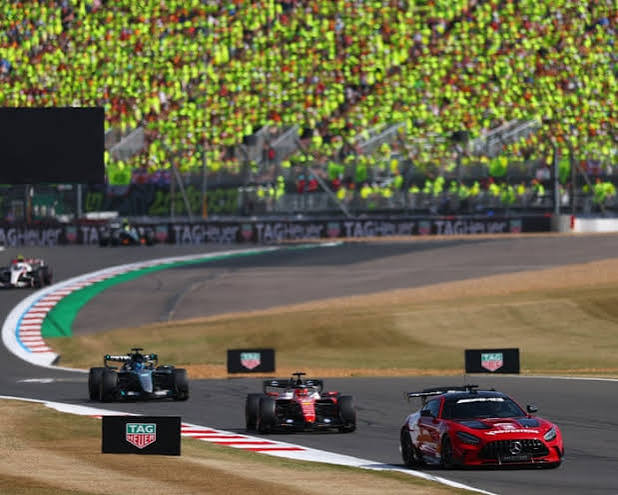


Charles Leclerc’s win at Silverstone gave Ferrari a timely boost, but the bigger story was the uneasy mood surrounding Formula 1’s new 2026 regulations. With cars looking slower, drivers frustrated, and teams already questioning the direction of the rulebook, the British Grand Prix felt less like a celebration of progress and more like a warning sign for the sport’s next era.
The race itself had drama in all the right places. Leclerc handled the pressure of a chaotic afternoon and converted a Safety Car finish into a valuable victory for Ferrari. Max Verstappen’s violent spin into the gravel on Lap 48 changed the shape of the race immediately, while Kimi Antonelli’s stunning pole position showed how quickly Mercedes’ rookie can rise to the occasion. But Antonelli’s drop to P10 after mechanical issues also reinforced a familiar truth in F1: raw pace means little if the machinery cannot hold up.
What is really bothering the paddock, though, is not just the result sheet. It is the feeling that the 2026 rules are already disappointing the people who have to race under them. The new technical engine package was supposed to represent the future of Formula 1, but early feedback suggests it may be creating a product that feels less explosive and less satisfying to drive. Drivers such as Lewis Hamilton and Lando Norris have voiced concern that the cars are becoming slower, and in a sport built on speed, that kind of criticism lands hard.
For the engineers, the logic behind the rule shift is easy to explain. Formula 1 wants greater efficiency, a more balanced hybrid system, and a technical framework that aligns with the sport’s long-term direction. But the problem is that efficiency does not automatically translate into excitement. If the cars lose the aggression, responsiveness, and raw edge that fans expect from F1, the category risks alienating the very audience it is trying to grow. That tension is now playing out in public.
Silverstone amplified the debate because it is a track where driver confidence and aero balance usually matter more than outright straight-line speed. When the cars still fail to feel right there, it raises questions about how the new regulations will perform across the wider calendar. A ruleset that frustrates drivers at one of the sport’s most iconic circuits is unlikely to settle the argument quickly. Instead, it may deepen the divide between the FIA, the teams, and the drivers themselves.
Ferrari, meanwhile, have reason to be encouraged. Leclerc’s victory showed that they can capitalize when the front-runners stumble, and Verstappen’s rare DNF gives them a glimpse of a championship fight that might actually open up. The key question is whether Ferrari can turn one messy weekend into a sustained challenge. Red Bull’s dominance has been built on consistency, precision, and ruthless execution, and one bad result does not erase years of structural advantage.
Still, the cracks are worth watching. If Ferrari can keep bringing a reliable package to the track while Red Bull wrestle with the occasional setback, the title picture becomes more interesting than it has been in years. The same weekend that exposed frustration with the 2026 regulations also hinted at a more competitive championship landscape. That dual reality may define the next phase of Formula 1: a sport trying to modernize its cars while preserving the intensity that makes grand prix racing compelling in the first place.