
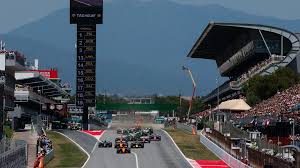


Formula 1’s calendar metamorphosis accelerates with Barcelona’s extension to 2032—but only on a rotational merry-go-round with Spa-Francorchamps. Even years host the Catalunya classic (2028, 2030, 2032); odds go to Belgium’s Ardennes beast. This compromise preserves icons amid calendar bloat: Madrid’s 2027 street loop joins Adelaide’s 2027 revival and Saudi’s evolving desert dash, sidelining purists’ favorites. Liberty Media’s blueprint? Urbanize F1, morphing races into spectacle bazaars where street circuits eclipse purpose-built relics like Montmeló.
Urbanization isn’t whimsy; it’s wallet wisdom. European stalwarts hemorrhage cash: Barcelona ponies up €25 million annually, Silverstone £26 million, Austria’s Red Bull Ring $25 million—peanuts against Middle Eastern windfalls. Saudi’s Jeddah shells $55 million through 2030, Abu Dhabi $42 million to 2031, Bahrain $52 million to 2036. Azerbaijan tops $57 million for its Baku spectacle. These fees—F1’s lifeblood, totaling $711 million yearly—fund prize pots and expansions, letting oil-rich hosts flaunt via glitzy pads and celebrity fly-ins. Classics scrape by on tourism scraps, their €300 million Barcelona boost paling against Riyadh’s global flex.
Street circuits embody the pivot: tight, unforgiving layouts doubling as lifestyle carnivals. Madrid’s Barajas hybrid weaves public roads with flowy sectors, promising Monaco-meets-Budapest thrills sans paywall. Adelaide resurrects its 1985-95 gem, blending parklands with urban buzz for fan zones pulsing EDM and pop-ups. Saudi eyes Qiddiya mega-project, a $500 billion entertainment nexus where F1 laps rollercoasters. These venues monetize off-track: VIP glamping, NFT drops, influencer alleys—revenue streams Barcelona’s solar-paneled hospitality can’t match, despite its SCI “most sustainable” nod.
Purpose-built tracks wither. Montmeló’s sweeping Turns 3-10 honed legends like Senna, but dated facilities and €355 million economic ripple can’t compete with street razzle. Rotation saves face—Spa’s Eau Rouge lives odd years—but whispers of Imola or Hungaroring axing loom as slots cap at 24-26. Financial Darwinism rules: low-fee Europeans rotate or vanish, supplanted by high-rollers chasing soft power.
F1’s soul shifts from engineering cathedrals to city spectacles. Fans lament safety car parades over high-speed duels, yet TV ratings soar in urban cores. Barcelona clings via upgrades—rooftop suites, EV charging—but rotation heralds twilight for tradition. As Adelaide revs and Madrid maps finalize, F1 bids adieu to golden eras, embracing a calendar where asphalt yields to asphalt festivals. Classics rotate into history; streets speed ahead.