
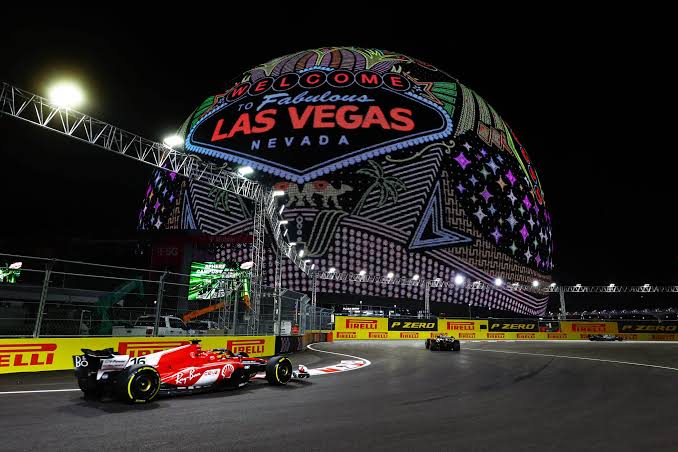


Formula 1 leaves the demanding, unpredictable conditions of Interlagos behind and heads to Las Vegas, where the 2026 championship enters its final triple-header. The Las Vegas Strip Circuit offers a very different test: a fast, low-downforce street layout run at night, where cold tyres, braking stability and energy deployment could shape the race more than outright top speed.
The Las Vegas Grand Prix takes place from November 19 to 21, with the 50-lap race scheduled for Saturday evening local time. The 6.201-kilometre circuit features 17 corners, a 1.92-kilometre main straight and high average speeds, making it one of the most distinctive venues on the calendar.
Unlike the bumpy, rain-affected environment of São Paulo, Las Vegas should reward cars that combine strong straight-line efficiency with stable braking. Teams are expected to run relatively low-downforce setups to maximise speed along the Strip, but that choice leaves less aerodynamic load through slower corners and can make the tyres harder to bring alive.
That creates the central technical question of the weekend: how quickly can drivers generate tyre temperature without sacrificing race pace? The desert night brings low ambient and track temperatures, while the circuit’s long straights give tyres limited opportunity to build heat through sustained cornering. Cold tyres reduce grip, lengthen braking distances and make traction out of slow corners more difficult.
Drivers have already raised concerns. Lando Norris warned that insufficient tyre temperature in Las Vegas could make the race especially difficult, while Max Verstappen highlighted the narrow operating window of the current tyre range. Their comments reflect a wider concern that the 2026 cars and tyres may make warm-up a more decisive performance factor than in previous seasons.
Ferrari, in particular, will be watching closely. Charles Leclerc has suggested that the team must resolve its tyre issues before Las Vegas, because the cool conditions could expose similar weaknesses to those seen at Interlagos. For teams struggling to keep their rubber in the correct window, a low-grip street circuit could turn a small setup compromise into a major race-day problem.
The low-downforce nature of the track also changes the usual balance between qualifying and race performance. A car with minimal wing may be quick in qualifying, but it could struggle to keep its tyres alive during a long stint, especially if sliding increases surface temperature unevenly. Conversely, a team that adds a little more rear stability may lose straight-line speed but gain confidence under braking and better tyre control across a stint.
Energy management adds another layer. The 2026 power-unit regulations increased the electrical component of performance and require teams to manage battery deployment and recovery carefully. On a circuit with long full-throttle sections and heavy braking zones, drivers must decide when to deploy stored energy and how aggressively to harvest on entry to corners.
That makes Las Vegas less forgiving than a conventional European circuit. At venues such as Monza, long straights dominate, but teams generally have more familiar reference points and warmer conditions. In Las Vegas, the combination of cold asphalt, low grip, high-speed braking and a street surface means teams may need to compromise their setups to protect tyre life rather than chase the fastest possible lap.
Race strategy could therefore become more variable than expected. If degradation remains low but warm-up is difficult, teams may prioritise longer first stints and avoid unnecessary stops. If tyres overheat after several laps of sliding, an earlier switch could become attractive. Safety cars, track evolution and traffic will only increase the importance of flexible pit-wall decision-making.
Mercedes arrives as the newly crowned Constructors’ Champion, but Las Vegas will still matter for the fight behind it. Ferrari, Red Bull and McLaren remain separated in the battle for the runner-up position, while midfield teams will view the unusual circuit as an opportunity to score unexpectedly strong results.
The Las Vegas Grand Prix will not simply reward the fastest car over one lap. It will favour the team that best understands how to warm its tyres, manage energy, retain braking confidence and adapt its strategy as the night race unfolds. On the Strip, precision under pressure may matter more than raw pace.