


Formula 1’s 2026 season has moved beyond a simple fight for victories. With Mercedes having already secured the Constructors’ Championship at the São Paulo Grand Prix, the remaining races have become a high-stakes proving ground for second place, reliability, tyre management and the technical direction teams will carry into the next phase of development.
Mercedes sealed its ninth constructors’ title after George Russell and Kimi Antonelli finished fourth and fifth in Brazil. The result left the team on 652 points, 142 clear of Ferrari, with only 129 points available across the final three rounds. That margin makes the championship mathematically settled, but it does not make the run-in meaningless.
The real contest now lies in the data. Under Formula 1’s new technical framework, performance is no longer decided solely by peak qualifying pace. The 2026 cars use active aerodynamics, lighter chassis and a power-unit formula that places far greater emphasis on electrical deployment, energy recovery and sustainable fuel. Teams must therefore balance one-lap performance against energy deployment, thermal behaviour and race-long tyre preservation.
Qualifying pace remains important, but it can be misleading. A car that produces a strong single lap may be using its energy aggressively or running a wing configuration that creates more drag than it can sustain over a full stint. In contrast, a rival that qualifies slightly slower may hold an advantage in race trim if its energy management allows more consistent deployment without compromising battery recovery.
That is where telemetry becomes decisive. Engineers will study MGU-K deployment traces, battery state-of-charge curves, braking energy recovery, throttle application and the point at which drivers begin lifting or harvesting. A car that can deploy power efficiently through traction zones while recovering enough energy on straights can protect its tyres and maintain pace deep into a stint.
Tyre degradation is the other central variable. The 2026 regulations reduced tyre width—by 25 mm at the front and 30 mm at the rear—and introduced a new generation of narrower tyres. That makes thermal management especially important, particularly at circuits with long acceleration phases, heavy braking zones or abrasive surfaces.
The São Paulo race offered a useful reminder of this challenge. Drivers and teams had limited opportunity to run the new tyres in representative wet conditions, and Pirelli has identified thermal degradation as an area requiring attention for next season. In such conditions, a team’s ability to bring tyres into the correct operating window without overheating them can matter as much as raw aerodynamic performance.
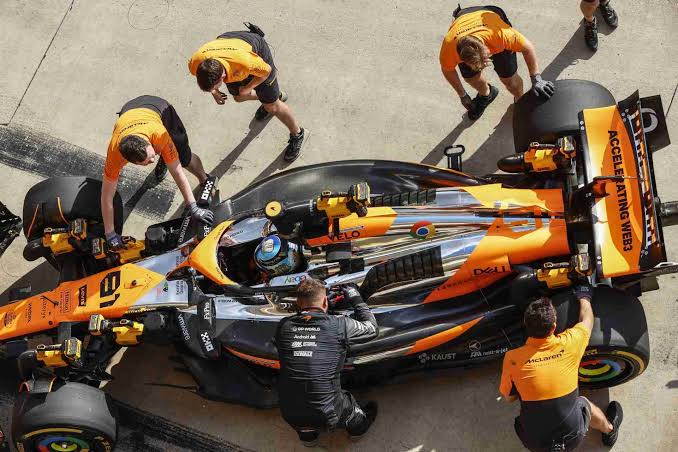
Pit-lane execution has become an equally important part of the equation. A fast stop is valuable, but the strategic call matters more: choosing the right tyre, timing the switch around safety-car risk, and avoiding an extra stop caused by excessive degradation. In a season where energy deployment and tyre behaviour are tightly linked, a poor call can erase a car’s underlying pace advantage.
Ferrari, Red Bull and McLaren are now fighting for positioning behind Mercedes, and their remaining development choices will reveal how they interpret the new regulations. Ferrari sits second on 510 points, Red Bull third on 415 and McLaren fourth on 398 after Brazil. With three rounds remaining, the battle for the runner-up spot remains live, while midfield teams are competing for valuable championship positions and prize-money implications.
The final stretch will also shape the 2027 development cycle. Because the 2026 rules changed the power unit, chassis and aerodynamic philosophy simultaneously, teams cannot simply copy a proven concept. They must identify whether their weaknesses stem from aerodynamic efficiency, electrical deployment, cooling, tyre warming or operational execution.
Mercedes has already demonstrated that it adapted best to the new formula, but the closing races will show whether its advantage was structural or whether rivals can close the gap through smarter setup, improved energy management and sharper pit-wall decisions. In Formula 1’s new era, the constructor battle is increasingly won not only in the wind tunnel, but in the split-second decisions made in the pit lane.