
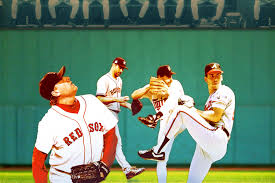


The traditional starting pitcher is no longer the automatic foundation of October baseball. In the 2026 MLB postseason, relievers have thrown more innings than starters, and the Championship Series has made clear that bullpen construction, matchup planning and high-leverage deployment can matter as much as an ace’s ability to go deep.
Through 25 postseason games, relievers accounted for 232 2/3 innings compared with 207 innings from starters—52.9 percent of all pitching. Starters have not thrown more postseason innings than relievers since 2023, and the gap has widened in each of the past three Octobers.
Milwaukee’s National League Championship Series sweep of the Los Angeles Dodgers is the clearest example. The Brewers’ bullpen allowed just three earned runs in 32 2/3 innings while holding opponents to a .139 batting average, repeatedly covering for starters who failed to reach five innings.
Manager Pat Murphy used seven different relievers across the series, with Abner Uribe, Aaron Ashby and Trevor Megill carrying much of the workload. Ashby, a former starter, provided multiple-inning flexibility, including 11 outs across the first two NLCS games and a save in Game 2.
The Brewers’ approach also reflects a broader shift in roster construction. Their relievers averaged 98 mph with fastballs during the postseason, while the overall postseason average fastball reached 96.1 mph. Power arms, sweepers, split-fingered fastballs and multi-inning relievers have made late innings far more difficult for lineups to solve.
Cleveland’s American League Championship Series approach has been similarly aggressive. The Guardians named Shawn Armstrong as their Game 4 opener, a move that shows how managers now treat the first inning as a matchup problem rather than a traditional starter’s responsibility. Armstrong has become one of Stephen Vogt’s most trusted high-leverage options.
The pitch clock has reinforced this trend. With less downtime between pitches and fewer long mound visits, managers can make faster decisions, exploit platoon advantages and keep relievers in narrowly defined roles. The result is more pitching changes, shorter appearances and a greater emphasis on sequencing the right arm against the right batter.
Offense has suffered accordingly. Batters were hitting just .212 through the early postseason, with the league on pace for its lowest postseason OPS since 1983. Clutch hitting therefore carries even greater value: when pitchers throw harder and managers can deploy fresh arms in nearly every high-pressure spot, one well-timed swing can decide a game.
The Dodgers’ series exposed the danger of relying on a thin bullpen. Los Angeles used seven of its nine relievers after Yoshinobu Yamamoto’s short Game 2 start, allowing Milwaukee to see nearly every available arm before Edwin Díaz. By contrast, Milwaukee’s off-days gave Murphy the freedom to keep using his best relievers in nearly every game.
The best-of-seven format may temporarily slow the bullpen revolution. Games 3 through 5 are played on consecutive days, meaning managers cannot endlessly burn their top arms and may need starters to provide length. But the underlying philosophy has already changed: October teams no longer ask whether a starter can finish six innings—they ask which reliever can erase the most dangerous three batters.
The World Series will likely be decided by the team that balances both worlds: starters capable of protecting the bullpen, and relievers capable of winning the final nine outs. In 2026, that balance—not a classic complete game—has become the real currency of October.