
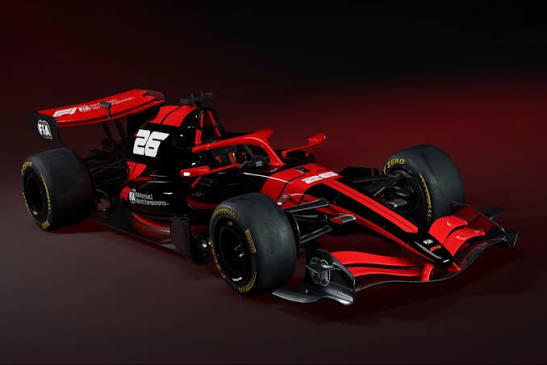


Formula 1’s late-season development race is increasingly being shaped by technical details that are difficult to see on television but obvious in telemetry. As teams move through the flyaway rounds, the battle is no longer simply about bringing a faster upgrade. It is about finding the correct balance between aerodynamic efficiency, tyre preservation and predictable handling across very different circuit demands.
The 2026 regulations have made that challenge even more complex. Cars now use active front and rear aerodynamics, allowing them to switch between a higher-downforce corner configuration and a lower-drag straight-line mode. At the same time, the move away from long ground-effect tunnels has transferred more responsibility to the wings, floor edges and rear diffuser.
That shift has increased scrutiny of component movement. FIA regulations set specific deflection limits for floor bodywork, floor winglets, front-wing flaps and rear-wing elements. Under the current technical rules, for example, the outer edge of the floor bodywork is limited to 8mm of vertical deflection under the prescribed load, while the rear-wing flap has a 7mm horizontal limit. These tests are designed to prevent teams from gaining an aerodynamic advantage through excessive flexibility.
The issue is not simply whether a wing moves when the car is stationary. Engineers are interested in how the entire aerodynamic platform behaves at speed, under braking and through kerbs. A component that remains inside the static test may still influence airflow differently when loaded dynamically. That is why FIA inspections, onboard footage and data analysis can become important as teams introduce new parts during the season.
The low-downforce versus high-downforce compromise remains one of the clearest performance battles. A low-drag package can produce stronger acceleration and higher top speed, particularly through long straights, but it may leave the car short of grip in slow and medium-speed corners. A high-downforce configuration improves braking stability and corner entry performance, yet it can increase drag, energy consumption and tyre surface temperatures.
Telemetry usually exposes the compromise through sector-by-sector traces. A low-downforce car may gain several kilometres per hour at the end of a straight but lose time during direction changes because the driver must lift earlier or carry less speed into the apex. A high-downforce car can appear slower on the straight while building a stronger lap through better minimum-corner speeds. The fastest overall setup depends on how the circuit distributes its lap time.
Tyre degradation adds another layer. Extra downforce can improve mechanical consistency by allowing a driver to control the car more accurately, but it can also increase the load placed on the tyre through fast corners. If the surface overheats, the initial qualifying advantage may disappear during a long stint. Conversely, a low-drag car may slide more under acceleration, creating small temperature spikes that gradually damage the rear tyres.
This is where race engineers must separate outright pace from sustainable performance. Two cars can record similar lap times while using completely different tyre-management strategies. One may achieve its speed through efficient cornering, while the other relies on aggressive energy deployment and increased tyre slip. Their positions can change dramatically once fuel loads fall, track temperatures rise or the tyres move beyond their ideal operating window.
The technical tension is also creating fresh garage battles. One driver may prefer a stable, high-downforce platform that supports late braking, while the other may accept a nervous rear end to gain straight-line speed. Differences in driving style can therefore influence upgrade direction, especially when teams have limited production capacity and must choose which aerodynamic concept to prioritise.
As the championship enters its late flyaway phase, the podium fight will be decided by more than headline upgrades. Teams that interpret FIA directives quickly, read tyre degradation accurately and choose the correct aerodynamic compromise will gain the most. In modern Formula 1, the decisive advantage may not be visible in a single corner. It may be hidden in a telemetry trace showing where grip is being created, where drag is being paid and how long the tyres can survive the price.