


Matchday 1 of the 2026/27 UEFA Champions League has come and gone, and once again the competition’s revamped single-table system is reshaping how clubs must approach the opening weeks of the campaign. Now in its third season, the 36-team league phase has quietly rewritten the psychology of early-season football in Europe, and nowhere is this clearer than in how brutally it punishes a shaky defensive start.
Under the old group-stage model, a poor opening result was rarely fatal. Four teams competed in a closed group, meaning even a defeat left five more matches to correct course against familiar opposition. A club could absorb a bad night, regroup, and still control its own destiny heading into the final rounds. That safety net has effectively disappeared.
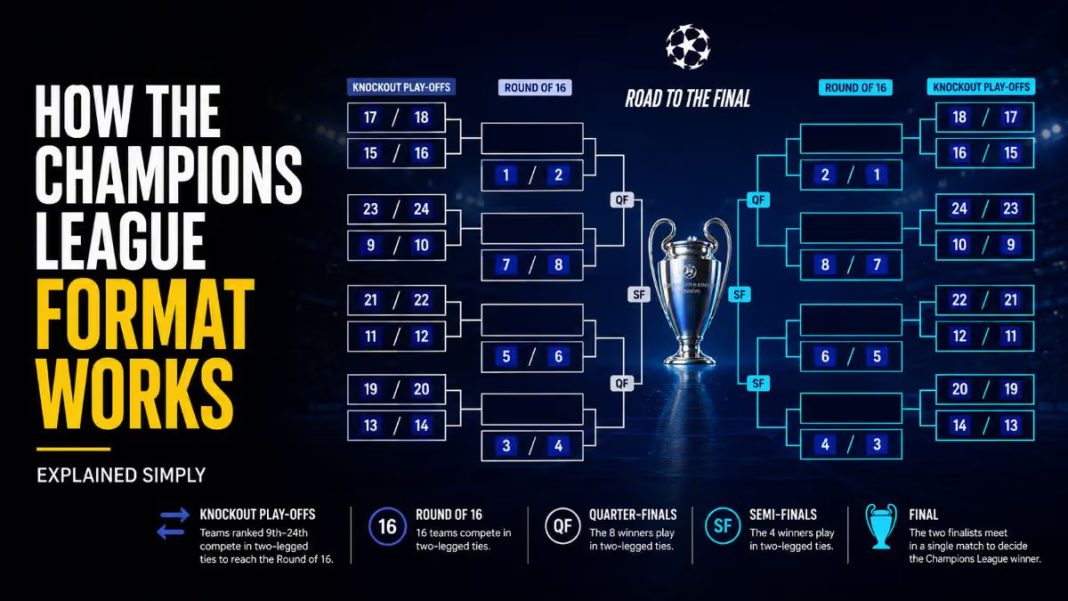
In the current format, every side plays eight different opponents across the league phase, drawn from a single 36-team pool, with only the top eight automatically advancing to the round of 16. Teams finishing ninth through twenty-fourth must survive a knockout play-off just to stay alive, while anything below twenty-fourth means an early European exit. With so many possible opponents and no repeated fixtures to lean on for a rebound, there is no cushion for a leaky defence. A single bad result doesn’t just cost points against one rival; it costs positioning against dozens of clubs simultaneously chasing the same limited spots.
This matchday’s early results illustrate the point well. Several fancied sides needed to come from behind or hold on nervously after conceding first, a scenario that now carries far heavier consequences than it once did. Concede two goals in an away leg against a mid-table entrant in October, and there’s no guaranteed rematch to make amends. Instead, that dropped result sits in the same table as results against continental heavyweights, weighted identically in the standings. A shaky backline exposed early doesn’t get quietly buried in a small group; it’s broadcast across a table that every rival, media outlet, and coefficient calculation can see from day one.
There’s a tactical ripple effect too. Managers now have strong incentive to prioritise defensive solidity over expansive, risk-taking football in the opening matchdays, since the format offers no forgiving structure for early collapses. Sides that traditionally start slowly while integrating new signings or tactical systems are especially vulnerable, because by the time cohesion arrives in November or December, the table may already be unforgiving. Squad depth issues, defensive injuries, or a mistimed formation experiment in September can linger on the log for the rest of the phase.
The format’s designers wanted more meaningful matches and fewer dead rubbers, and on that front, they have largely succeeded. But an unintended consequence is a competition that rewards conservative caution before rewarding attacking ambition, at least until a club has banked enough points to relax. For supporters, it makes early fixtures unusually tense. For coaches, it means the margin for defensive error has never been thinner in the competition’s modern history.
As the campaign progresses through its eight matchdays, expect the pattern to repeat: teams that stabilise defensively in September and October will control their own fate, while those who don’t may find themselves fighting from a hole that this format simply does not allow them to climb out of easily.