
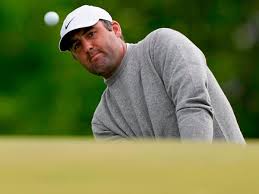


Rory McIlroy’s second round at Aronimink looked like the response of a player who had absorbed the pressure, the frustration, and the public noise, then turned it into fuel. After a difficult emotional post-round moment the day before, he came back with a clean three-under round that pushed him back into major contention and reminded everyone why his game still has the highest ceiling in the field. The contrast with Scottie Scheffler’s uneven Friday only sharpened the sense that this PGA Championship may now hinge on who adapts best to Aronimink’s demands.
The big theme at this course is control. Aronimink is asking players to be brave off the tee but disciplined into the greens, and that creates a narrow path between aggression and self-destruction. McIlroy’s comments about the layout—wide corridors, but punishing pin positions and tricky slopes—capture the exact challenge. The course tempts players to attack, yet one slightly aggressive miss can leave a brutal recovery or a short-sided bunker shot. Rory’s improvement from round one to round two suggests he made the right mechanical and tactical corrections: a little less emotional chasing, a little more acceptance of where the scoring chances actually live.
That matters because major golf is often less about peak swing speed and more about decision quality under stress. McIlroy’s Friday round felt like a player simplifying the problem. Instead of forcing hero shots, he found cleaner shapes, better positional golf, and enough control to avoid the kind of errors that can spiral on a course like this. In that sense, his bounce-back was not just a scoring round. It was a psychological reset.
Scheffler, by contrast, looked human in a way he usually does not. He started his second round with a bogey and spent much of the day fighting from behind after missing fairways and appearing uncomfortable with the setup. Even so, he stayed close enough to remain in the tournament conversation, which is what makes him dangerous. But there is a difference between staying relevant and being in command. Aronimink seems to be forcing Scheffler into more recovery golf than he prefers, and that could matter over the weekend if the wind and firmness continue to complicate approach shots.
The course conditions are likely to intensify that pressure. The forecast calls for firming greens, persistent wind, and gusts strong enough to keep players from trusting every stock number in the yardage book. That makes iron play and distance control more important than raw power. It also explains why the leaderboard remains crowded, with the field still close enough that one clean round can change everything. McIlroy’s precise second-round adjustments therefore arrive at exactly the right moment.
Bryson DeChambeau’s missed cut is another reminder that this setup is rewarding patience and adaptability more than brute force. Aronimink is not simply punishing bad golf; it is exposing any player who loses the balance between conviction and caution. That is why McIlroy’s momentum feels significant. He did not just play better. He looked like he learned the course faster.
If Saturday becomes a true moving day, the player who best manages Aronimink’s subtle traps may separate from the pack. Right now, McIlroy has the cleaner trendline, while Scheffler still has the higher floor. That is exactly the kind of tension that makes a major compelling.