


The 2026 World Cup is shaping up as more than a tournament of stars; it is becoming a tournament of systems built around stars. Lionel Messi and Cristiano Ronaldo may command the emotional spotlight, but the deeper tactical story is how teams structure themselves around aging icons, single-point attacking hubs, and underdog game plans designed to survive the group stage.
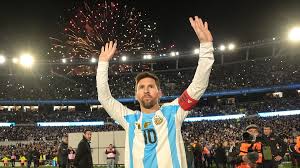
Argentina’s approach with Messi is likely to be the most controlled of the two. At this stage of his career, Messi is not expected to carry every phase of play in the same way he once did. Instead, Argentina’s challenge is to manage his workload while maximizing his influence in the final third. That means shorter defensive assignments, more support in buildup, and a structure that lets him arrive in decisive moments rather than spend energy chasing the game. The best version of Argentina is one where Messi remains the final solver, not the engine that has to solve everything.
South Korea presents a different kind of dependency. With Son Heung-min, the team’s structure often bends around his strengths more directly. Son is not just the headline player; he is frequently the team’s main outlet, transition threat, and emotional reference point. That creates a sharper tactical identity, but also a vulnerability. If opponents can isolate him, limit service, or force South Korea to attack through less natural routes, the entire shape of the team can lose force. In that sense, South Korea’s challenge is not only to support Son, but to create enough secondary threats that he cannot be marked out of the game.
That contrast between Argentina and South Korea is one of the most interesting subplots of the tournament. Argentina can afford to reduce Messi’s workload because it has a deeper technical ecosystem and a more varied attacking structure. South Korea, by contrast, often needs Son to be both leader and solution. One side is about preservation, the other about dependence. Both strategies can work, but they demand different levels of tactical discipline.
The underdog narratives are just as important. Teams like Tunisia and Haiti do not enter a World Cup expecting to dominate possession or win through individual brilliance alone. Their survival usually depends on compact defensive shape, set-piece efficiency, and the ability to turn one good spell into a result. For these teams, the group stage is often a test of emotional control as much as technique. If they can stay alive deep into matches, they can frustrate stronger opponents and create openings from chaos.
That is what makes this World Cup so compelling from a tactical point of view. It is not just about who has the biggest names. It is about how each team manages pressure through structure. Argentina must protect Messi without dulling his impact. South Korea must use Son without becoming predictable. Underdogs like Tunisia and Haiti must compress the game until one moment changes everything.
In the end, the 2026 World Cup may be remembered not only for the final appearances of two legends, but for the different ways teams tried to build around them. Some will manage stars. Some will depend on them. Others will simply try to survive long enough for the tournament to open a door. That tactical diversity is what should make this World Cup feel so alive.