
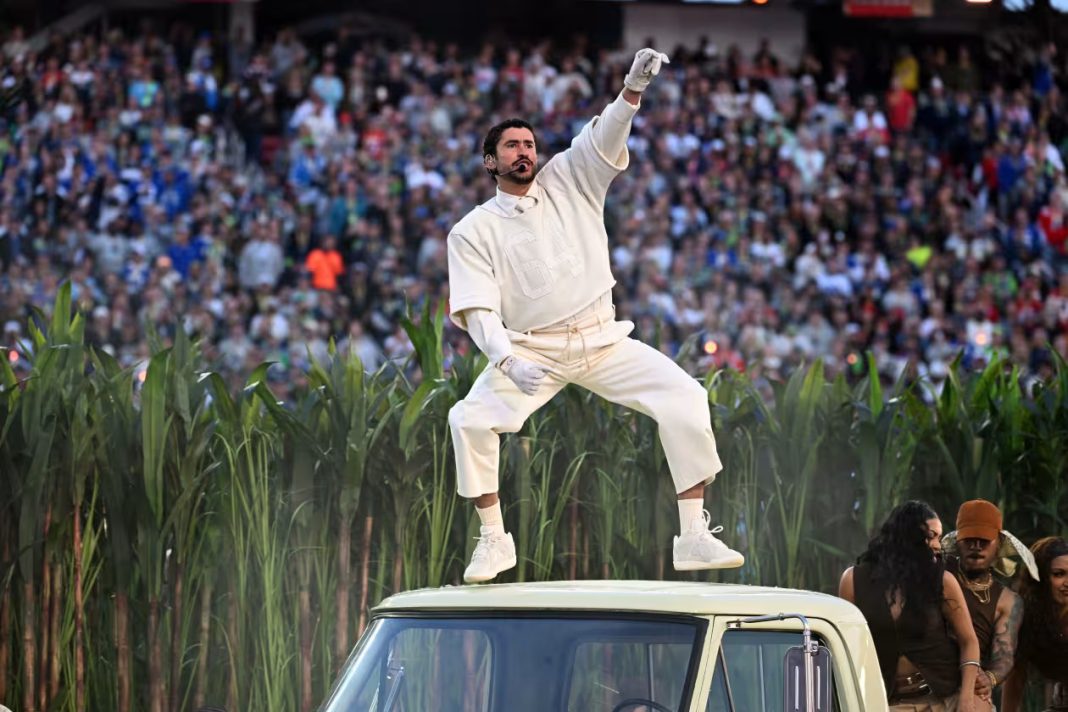


Bad Bunny’s Super Bowl halftime spectacle shattered expectations, pulling in 128.2 million viewers—eclipsing the game’s average audience of 124.9 million during that exact slot. This wasn’t a fluke; it’s the latest signal of a seismic pivot where the NFL’s crown jewel risks morphing from gridiron epic into music festival backdrop. For a league built on bone-crunching hits and fourth-quarter miracles, surrendering the spotlight to a reggaeton kingpin underscores a desperate bid for cultural dominance.
Numbers don’t lie, and these scream transformation. Historically, halftime shows hovered at 100-110 million while games peaked higher overall—think Usher’s 2024 draw trailing the matchup itself. Bad Bunny flipped the script: his 13-minute barrage of hits like “Tití Me Preguntó” and guest spots with J Balvin spiked viewership 2.7% above game averages in that window, per Nielsen fast nationals. Younger demos skewed hardest—Gen Z and millennials glued to screens for vibes over touchdowns—while traditional football purists tuned out halftime snacks. This outperformance marks the first time a performer single-handedly topped contemporaneous game metrics, validating NFL’s $1 billion+ entertainment investments.
The pivot traces to 2013’s Beyoncé jolt, but Bad Bunny accelerates it. Global icons like The Weeknd, Dr. Dre, or Shakira turned halftime into must-see TV, blending pyrotechnics, choreography, and A-list collabs that transcend borders. For Indian fans juggling Premier League streams and WWE, this crossover gold: Bad Bunny’s Puerto Rican flair resonates via Spotify playlists, drawing non-sports viewers who might never grasp two-point conversions. NFL execs chase this alchemy—halftime now generates 30% more social buzz than final scores, with #SuperBowlHalftime trending worldwide hours post-game.
Why the football fade? Parity plagues the sport: predictable offenses, officiating gripes, and 17-game slogs dilute drama. Halftime, conversely, delivers instant dopamine—polished production, zero turnovers, universal appeal. Data bears it: halftime streams rose 25% year-over-year on Peacock and YouTube TV, while in-game lulls saw cord-cutters bail. Sponsors flock accordingly; Apple Music’s deal poured $50 million into 2025’s extravaganza, yielding Rolex-tier exposure sans quarterback controversies. Bad Bunny’s set, heavy on dance breaks and fan chants, masked a middling third quarter, proving entertainment’s reliability over athletic chaos.
Critics cry sacrilege—the Vince Lombardi Trophy shouldn’t play second fiddle to strobe lights. Yet global reach demands adaptation: NFL eyes Bollywood cameos or K-pop fusions to hook Asia, where cricket reigns. Bad Bunny’s pull—128 million spanned U.S. to Latin America—boosts international rights fees, funding stadiums and streaming wars. Purists lament, but commissioners like Roger Goodell prioritize eyeballs; if halftime sustains 120+ million consistently, football becomes the intermission.
This “festival effect” reshapes strategy. Future bookings lean pop titans—Rihanna rumors swirl—while VR halftime experiences lure esports crowds. Game-day narratives pivot: pregame hypes performers as co-stars, postgame recaps blend MVPs with mic drops. For crossover fans in Guwahati pubs, it’s win-win: Bad Bunny intros football to playlist kids, potentially converting them to fantasy leagues.
The Super Bowl endures as America’s ritual, but Bad Bunny’s triumph cements the pivot. Football remains core, yet halftime’s gravitational pull hints at a hybrid future—gladiators yielding to glitz. As viewership wars rage with Netflix bids, the NFL bets on beats to secure its throne. Touchdown or not, the real MVP now wears stage lights.