
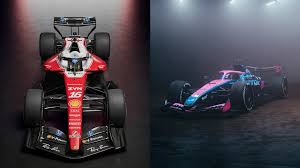


Formula 1’s 2026 pre-season testing has ignited familiar whispers of rule-bending innovation, with Ferrari’s floor design drawing rival scrutiny for allegedly dancing on the FIA’s regulatory tightrope. Far from mere speed boasts, this controversy revives F1’s storied tradition of engineering gray areas—where bold interpretations spark dominance or FIA crackdowns. Echoing Brawn GP’s 2009 double diffuser loophole that clinched the title, Ferrari’s SF-26 floor edges into uncharted territory under the new flat-floor, active aero regs, blending historical cunning with modern downforce dilemmas.
The 2026 rules ditch ground-effect Venturi tunnels for flatter floors and wheel-adjacent “boards” that manage in-washing flow—aiming for closer racing via wheel wake harnessing. Rivals buzz about Ferrari’s floor geometry: aggressive edge ramps and diffuser slot gaps that allegedly flex subtly under load, boosting rear downforce without breaching plank stiffness limits. Pre-Barcelona tests saw the SF-26 halt abruptly, fueling talk of FIA probes into non-uniform floor deflection around measurement holes—much like 2023’s flexi-floor saga where Red Bull and Ferrari pushed plank wear tolerances. Lewis Hamilton’s debut laps hinted at razor-thin ride heights, per paddock chatter, hinting at a design prioritizing diffuser ramp acceleration over conservative setups.
History offers cautionary blueprints. Brawn’s double diffuser exploited vague wording on floor strakes, generating 2009’s bargeboard-like gains until rivals copied post-Monaco. Red Bull’s 2021 rear floor edges similarly redefined “legal flex” until mid-season directives. Ferrari’s 2026 play? A high-stakes bet on uniform stiffness clauses (variance ≤10% around holes), potentially spreading skid material rearward for compliant-yet-clever flow regulation. If upheld, it gifts undercut speed in sector 2; if clamped, expect retrofits like McLaren’s 2023 plank hikes. Rivals like Mercedes eye FIA’s Article 3.15.8a enforcement, wary of in-season “safety” tweaks bypassing 8-team votes.
This gray-area chess defines F1 evolution. Ferrari’s pull-rod front suspension—swapped from 2025 pushrod—optimizes airflow to these boards, contrasting Alpine’s conservative slots. Hamilton’s feedback, post-test silence notwithstanding, could refine the operating window, much as Ross Brawn iterated mid-2009. Technical directors debate: does Ferrari’s ramp sequencing prevent diffuser stall (like wing slot gaps), or skirt flat-floor intent? Wind tunnel data whispers suggest 0.3s lap gains in high-speed corners, but plank wear risks loom if heights dip below intent.
For 2026’s sustainable power units and manual override active aero, such innovations test governance. Ferrari risks narrative damage—echoing 2025’s canceled floor update—but precedent favors pioneers. Rivals protest to force clarity before Australia, mirroring 2009’s copycat rush. Ultimately, this controversy underscores F1’s essence: regulators chase engineers who rewrite physics within legalese.
Ferrari’s floor isn’t rebellion; it’s calculated brinkmanship. As testing laps pile up, expect FIA clarifications—and copycats. In F1’s gray zones, the edge belongs to the bold.