
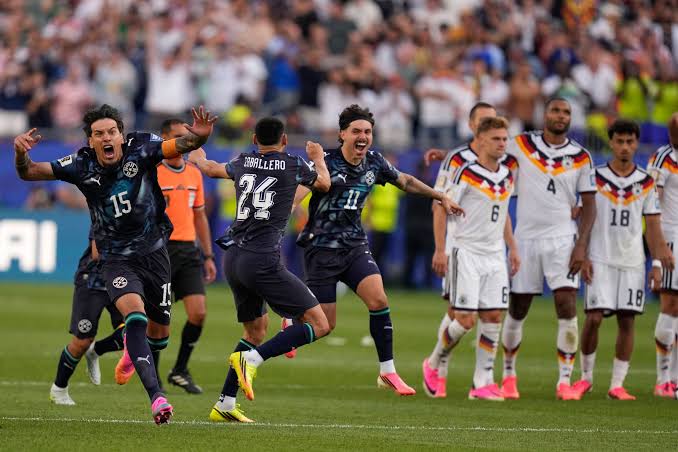


The 2026 FIFA World Cup is starting to look like the tournament where old assumptions finally cracked. Paraguay’s penalty shootout win over Germany and Morocco’s dramatic elimination of the Netherlands have turned the knockout rounds into a warning shot for Europe’s traditional heavyweights. On North American soil, South American grit and African ambition are rewriting the bracket in real time.
Paraguay’s victory in Boston had all the ingredients of a classic World Cup upset. Against four-time champion Germany, the match was tight for 120 minutes and finished 1-1 before the shootout decided everything. In those moments, the pressure shifts from tactics to nerve, and Paraguay handled it better. Jose Canale’s sudden-death winner was the kind of strike that can define a nation’s tournament, not just a single match. Germany may still carry the weight of history, but in this World Cup, history is no longer enough.
Morocco’s result in Monterrey followed a similar script, but the symbolism was just as powerful. The Atlas Lions pushed the Netherlands out after a 1-1 draw and a 3-2 penalty shootout win. Morocco has spent recent years building a reputation as a fearless, organized, and technically sharp side, and this result only strengthens that image. Beating a European giant in a knockout game is one thing. Doing it on penalties, with the entire match reduced to cold-blooded execution, is something else entirely.
That is why this World Cup is beginning to feel like the death of the European giant era. Not because Europe lacks talent, but because its traditional powerhouses can no longer assume control when the bracket tightens. South American teams bring edge, rhythm, and emotional intensity. African teams bring athleticism, structure, and the confidence that they can outlast anyone in a pressure game. When those traits meet the nerves of a penalty shootout, the supposed favorite can disappear in a matter of seconds.
What makes these upsets so compelling is the way they are happening. They are not flukes produced by chaos alone. They are the result of disciplined teams refusing to be intimidated. A 120-minute stalemate is not a sign of inferiority; it is often a sign that the underdog has dragged the heavyweight into a fight it did not expect to survive. Once penalties arrive, the margin is tiny, and every step, glance, and breath becomes part of the story.
For Europe’s biggest names, the lesson is harsh but clear. Reputation does not win knockout matches. Calm does. Precision does. Belief does. And right now, teams like Paraguay and Morocco are showing more of those qualities than sides with far more trophies on their shelves. If this World Cup keeps moving in the same direction, the map of global soccer may look very different by the time the final whistle sounds.