
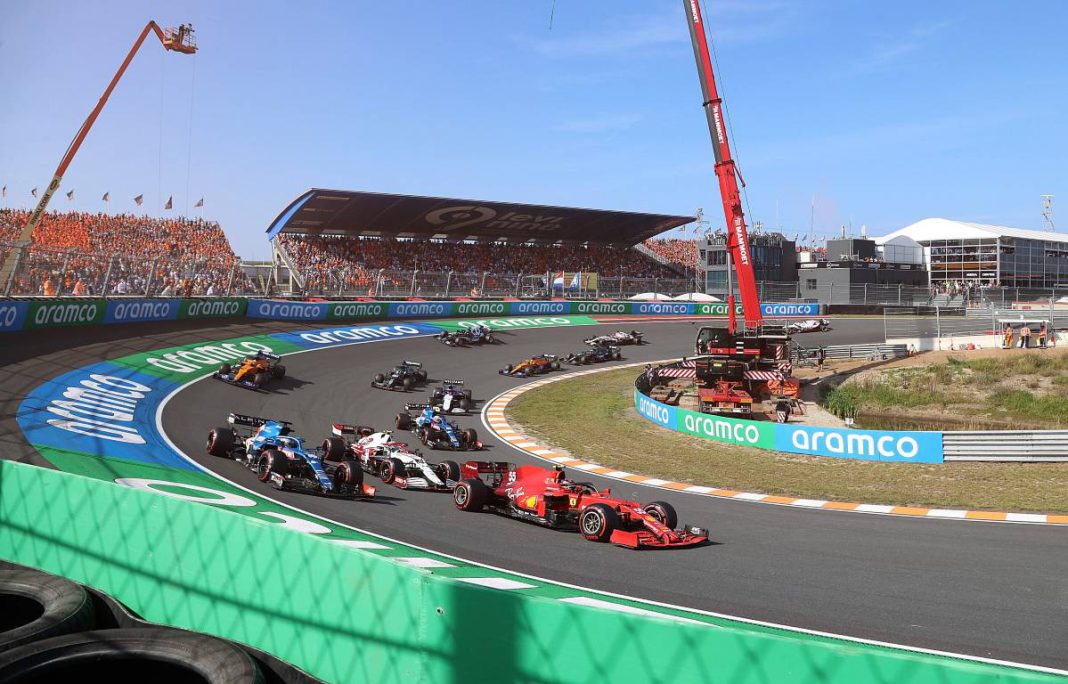


Formula 1 returns from its summer break with a tactical puzzle at Circuit Zandvoort, where the Dutch Grand Prix Sprint Weekend promises to be a masterclass in aerodynamic compromise and tire management. McLaren’s Lando Norris and Oscar Piastri arrive with momentum, their high-downforce packages perfectly suited to Zandvoort’s relentless sequence of medium and high-speed corners, but they face the ultimate test: Max Verstappen on his home turf, backed by a Red Bull machine that has historically dominated this unique layout.
The circuit’s defining feature—its banked turns at Turn 3 (Hugenholtzbocht) and Turn 14 (Arie Luyendijkbocht)—creates a physics-defying challenge that separates the contenders from the pretenders. Banking at 18-19 degrees, these corners generate extraordinary vertical and lateral loads, forcing teams to run high-downforce rear wings that maximize grip but punish tire degradation over a Sprint format. Unlike traditional circuits where downforce is a trade-off against drag, Zandvoort’s banking allows cars to carry more speed through the corner while the centrifugal force pushes the car harder into the tarmac, effectively increasing the downforce without additional aerodynamic penalty.
This creates a brutal tire management scenario. The hardest three compounds in Pirelli’s range have been nominated specifically for Zandvoort, as the sustained combined forces—downforce pressing perpendicular to the road surface while lateral G-forces push outward—generate heat levels that can trigger thermal degradation within just a few laps. In a Sprint race, where there’s no room for error and pit stops are limited, teams must find the delicate balance between aggressive downforce setups that maximize cornering speed and conservative approaches that preserve tire life.
McLaren’s advantage lies in their 2026 car’s high-downforce efficiency, which has shown exceptional performance in similar high-load circuits like Silverstone and Barcelona. Norris and Piastri can exploit the banked corners by carrying more speed through the apex, using the extra grip to minimize time lost in the middle sector. Red Bull, meanwhile, relies on Verstappen’s intimate knowledge of the circuit and their superior traction out of slow corners, particularly through the final sector where the banking at Turn 14 extends the straight by 340 meters, creating a crucial overtaking opportunity into Turn 1 (Tarzan).
Mercedes faces the toughest challenge, their 2026 package struggling with rear-end stability in high-downforce configurations. Lewis Hamilton and George Russell will need to manage tire temperatures carefully, as excessive sliding through the banked turns can trigger graining—a phenomenon where rubber shears away and rolls into small grains, creating an uneven surface that destroys grip.
Sector speed expectations reveal the tactical battleground:
The Sprint format amplifies every mistake. With no second chance, drivers must push from lap one while managing tire degradation that can cost 0.1-0.2 seconds per lap if temperatures spike. For Norris and Piastri, the opportunity is clear: exploit their car’s strengths in the banked corners, force Verstappen into a tire battle, and capitalize on any Red Bull vulnerability in the high-load sectors. For the home hero, it’s about controlling the pace, managing the tires, and using that extended straight to defend or attack as the Sprint unfolds.