
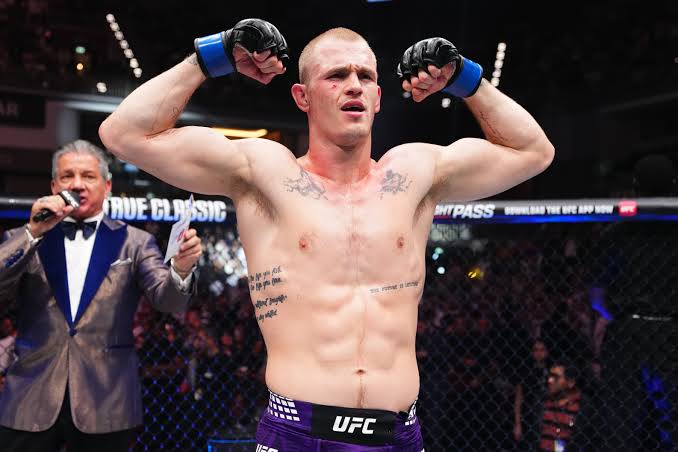


UFC’s next two blockbuster pay-per-views are beginning to define the shape of the 2026 calendar, and both main events offer far more than simple name value. Conor McGregor’s rematch with Max Holloway at UFC 329 and Islam Makhachev’s title defense against Ian Machado Garry at UFC 330 bring together four fighters at very different points in their careers, while also raising important questions about how styles evolve over time and whether elite technique can still be neutralized by timing, pressure or power.
The McGregor-Holloway rematch is especially intriguing because their first meeting took place in 2013, long before either man became a global name. At that stage, McGregor was still building the aura that would eventually make him one of the sport’s biggest stars, while Holloway was just beginning his climb toward championship-level consistency. More than a decade later, both men are far more complete fighters. McGregor’s best traits have always been precision, timing and confidence in the opening exchanges, but long layoffs and injuries have raised questions about whether he can still sustain that sharpness over multiple rounds. Holloway, by contrast, has developed into one of the most durable and high-volume strikers in MMA, with improved defensive awareness and the kind of pace that can wear down almost anyone.
That stylistic contrast makes the rematch compelling. McGregor has already hinted that he wants another stand-and-trade fight, which plays into the same type of dramatic striking battle fans remember from their first meeting. But Holloway is no longer the fighter who could be overwhelmed by McGregor’s early rhythm alone. He now carries more experience, better layering in his combinations and a stronger sense of how to manage range through long stretches of pressure. If the fight stays upright, the real question is whether McGregor can still create the kind of early damage that changes Holloway’s pace before the fight becomes a test of endurance.
UFC 330 presents a different kind of challenge. Makhachev has built his reputation on control, composure and the ability to force opponents into uncomfortable positions long before they can settle into their preferred game plan. Ian Machado Garry enters the matchup with a very different profile, built around movement, distance striking and clean shot selection. His best chance lies in making the fight look like a kickboxing match for as long as possible, using footwork and long-range offense to stay upright and frustrate Makhachev’s takedown entries.
Still, defeating Makhachev is a tall order for any striker who cannot consistently deny the grappling threat. Even when opponents start well on the feet, Makhachev is known for gradually shrinking space, dragging fights into clinches and making the pace feel heavier as the rounds progress. Garry’s striking can absolutely create problems, especially if he can land early and force Makhachev to reset repeatedly. But the deeper the fight goes, the more the champion’s pressure, chain wrestling and positional control tend to take over. That is what makes this matchup so fascinating: Garry has the tools to make it competitive, but Makhachev has the kind of system that often turns competitive fights into controlled ones.
Together, these main events give UFC 329 and UFC 330 a strong narrative backbone. One asks whether an older but still dangerous McGregor can recapture enough of his old sharpness to beat a more seasoned Holloway. The other asks whether Garry’s technical striking is enough to prevent Makhachev from imposing his preferred terms. Both fights are high-level style tests, and both could say a lot about where their divisions are headed next.