
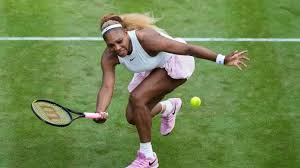


Serena Williams is back on tennis’ biggest stage, and the sport instantly feels different. The 23-time Grand Slam champion has accepted a main-draw wildcard for the 2026 Wimbledon Championships, setting up a remarkable return to professional singles play at age 44 and creating one of the most talked-about moments of the season.
Her first-round opponent is Australian Maya Joint, a matchup that will draw attention well beyond the usual Wimbledon audience. Whenever Serena steps onto a court, the match becomes bigger than the draw sheet. It becomes a test of memory, legacy, and belief all at once. For a player who once dominated the sport with force and precision, simply returning to singles competition after stepping away following the 2022 U.S. Open already feels historic. The fact that it is happening at Wimbledon only adds to the drama.
What makes this comeback so compelling is that Serena did not return as a novelty act. She earned a place in the main draw and spoke openly about still feeling the pre-match nerves that come with competition. That detail matters because it reminds everyone that the mindset of a champion does not disappear just because time passes. Even after years away from the singles grind, the competitive fire is still there. The nerves are not a weakness in this case; they are proof that the stakes still matter to her.
From a tennis perspective, the return raises fascinating questions. Serena’s game was always built on power, timing, and an ability to rise in the biggest moments. Those qualities can still trouble opponents if her body holds up and her rhythm returns quickly. At Wimbledon, where serve, first-strike tennis, and confidence on grass often decide matches, Serena’s style has always made sense. That is part of why this comeback feels believable rather than purely ceremonial.
The emotional layer is just as strong. Serena will also reunite with Venus Williams in the women’s doubles competition, another reminder of how much of tennis history the Williams sisters have shaped together. Their partnership has long represented family, excellence, and longevity in a sport where careers are often shorter and more fragile than fans would like. Seeing them back on the same Wimbledon stage gives the tournament a sense of continuity that few athletes could create.
Whether Serena makes a deep run or not, the impact of this return is already enormous. She has once again turned tennis into the center of the sports world, reminding fans why she has always been more than a champion. She is an event, a standard, and a story all by herself. Wimbledon has hosted countless great matches, but few returns in the modern era will carry this much emotional weight or global interest.