
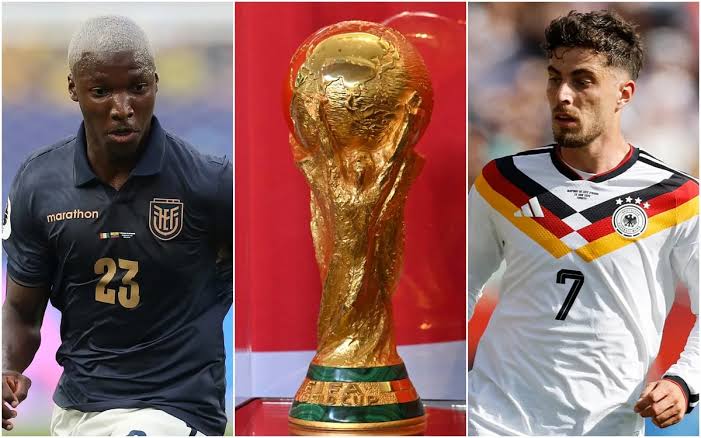


Ecuador produced one of the defining results of the 2026 FIFA World Cup by beating Germany 2-1 at the New York/New Jersey Stadium, a result that sent Sebastián Beccacece’s side into the knockout rounds and reminded the tournament that discipline and belief can still beat pedigree. Germany struck almost immediately through Leroy Sané, but Ecuador refused to let the early setback shape the rest of the match. Instead, they responded with composure, intensity and a clear tactical plan that gradually turned the game in their favor.
The most striking part of Ecuador’s performance was not simply that they came back from an early goal, but how quickly they recovered emotionally. Conceding inside two minutes against a four-time champion could easily have led to hesitation or damage control. Ecuador did the opposite. They kept their defensive line organized, pushed their midfield higher and continued to press Germany in areas where the favorite was least comfortable. That refusal to panic changed the tone of the match almost instantly.
Their equalizer in the ninth minute was a perfect example of that mindset. Nilson Angulo’s long-range strike came after Ecuador had already established that they would not retreat. The goal was important not only on the scoreboard, but psychologically. It told Germany that the match would not follow the script many expected. From that point on, Ecuador’s shape and intensity gave them the belief that an upset was possible.
Beccacece’s side also made life difficult for Germany by disrupting the buildup phase. Ecuador’s high press repeatedly forced rushed decisions from the back line and midfield, limiting the kind of controlled passing sequences Germany usually uses to settle matches. Rather than allowing Germany to dictate rhythm, Ecuador pressed aggressively, closed central passing lanes and made every touch under pressure feel heavier. Over time, that created tension in the German defense and turned a technically strong team into one that looked increasingly uneasy.
That pressure mattered most in the decisive phase of the match. Germany’s back line, experienced as it was, began to show signs of miscommunication under Ecuador’s constant harassment. In the 77th minute, Gonzalo Plata reacted first to a near-post corner flick and punished the confusion with the winning goal. The finish was sharp, but the real story was how Ecuador had forced the kind of defensive uncertainty that made the goal possible in the first place.
This result says a great deal about Ecuador’s mentality. Teams often talk about resilience, but few display it against a heavyweight opponent in such a convincing way. Beccacece’s players did not wait for Germany to hand them an opening; they created pressure, stayed brave on and off the ball and kept believing that the game was there to be won. That kind of psychological strength is often what separates a respectable underdog from a true tournament disruptor.
Germany still advanced as Group E winners on goal difference, but the result will be remembered far more for Ecuador’s execution than for Germany’s escape. In a World Cup full of expanding expectations and familiar powerhouses, Ecuador showed that a smart pressing structure and the courage to stay aggressive can still produce a genuine shock. It was not just a famous win — it was a tactical statement.