
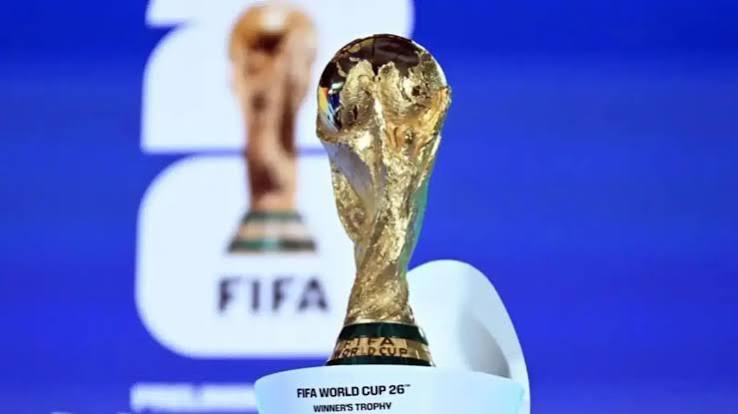


The 2026 FIFA World Cup is beginning to show exactly what its expanded format was designed to deliver: more teams, more drama, more money, and more uncertainty. With the group stage nearing its end across North America, heavyweights such as France, Spain, Germany, Argentina, Brazil, the United States and Mexico have already secured places in the historic Round of 32. At the same time, the tournament’s massive $871 million prize pool has underlined just how much is at stake in this first-ever 48-team edition.
The size of the reward changes the way the tournament feels from top to bottom. Every participating nation is guaranteed at least $12.5 million, a figure that can transform programs for many smaller federations. For debutant and lower-ranked teams, that kind of financial security can mean better facilities, stronger youth development and more international exposure long after the final whistle of the tournament. In that sense, the new World Cup is not only a sporting event but also a global investment engine.
Competitive balance, however, remains the biggest point of debate. Supporters of expansion argue that the broader field gives more countries a genuine chance to experience the sport’s biggest stage, while also increasing the likelihood of memorable underdog stories. That has already become one of the early narratives of the tournament. Several debutants and lesser-known nations have shown they can compete, at least in stretches, with established powers. For those teams, even taking points off a major nation can reshape how they are viewed at home and abroad.
Critics, on the other hand, question whether the expanded structure dilutes the intensity that made the World Cup group stage so compelling in the first place. In previous editions, nearly every match carried the threat of immediate elimination. With more places available and a larger knockout bracket, some observers believe the early rounds risk becoming less ruthless, allowing stronger teams more room to recover from poor performances. That concern is not without merit, especially when elite squads can afford a slow start and still move on.
Still, the 48-team format has created new possibilities. A Round of 32 means more nations have a path to the knockout stage, and that inevitably broadens the number of stories worth following. It also gives emerging football countries a chance to measure themselves against the elite in a tournament setting that matters. For players and fans from those nations, simply surviving the group stage can already feel like a breakthrough moment.
For the traditional giants, the expanded World Cup adds a different kind of pressure. Teams like Argentina, Brazil, France, Germany, Spain, the USA and Mexico are expected to advance, but expectation alone does not guarantee control. The larger field can produce unpredictable matchups, unfamiliar opponents and more chances for tactical surprises. A single lapse in the new knockout format could still derail a title run, and that keeps the tournament’s biggest names under constant scrutiny.
The financial scale of the competition also reflects FIFA’s broader strategy. More teams mean more global markets, more broadcast reach and more commercial upside. The challenge is making sure the tournament remains competitive enough to justify the scale. So far, the 2026 edition suggests it can do both: deliver a larger stage without completely losing the edge that defines World Cup football.
As the Round of 32 takes shape, the expanded format is already proving that it can create room for both expected progress and unexpected resistance. Whether it ultimately enhances the competition or stretches it too thin may depend on what happens next. For now, the financial windfall and the fresh faces have given the World Cup a new kind of energy.