
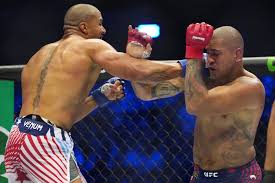


Alex Pereira has escalated his response to the contentious second-round stoppage against Ciryl Gane at UFC Freedom 250, filing an appeal that targets referee Herb Dean’s handling of strikes to the back of the head. Pereira’s camp argues that a sequence of blows landed behind the skull’s “mohawk” area and that Dean’s intervention prevented him from continuing. The fighter is seeking not only official recognition of the controversy but also an immediate rematch to settle the matter inside the Octagon.
Herb Dean has already gone public with a video explanation defending the call, emphasizing how quickly referees must interpret messy, split-second sequences and the difficulty of adjudicating strikes around the top and back of the skull within the framework of MMA rules. Dean noted that the precise classification of contact zones — lawful, borderline, and illegal — can be ambiguous in motion, and he insisted his priority was fighter safety. That defense frames the dispute as one rooted in human judgment under pressure, but it does not diminish Pereira’s insistence that the stoppage cost him a fair resolution.
Legally, Pereira’s route faces several hurdles. Athletic commissions historically defer to referee discretion unless there is clear evidence of rule misapplication or an egregious procedural error. For an appeal to succeed, Pereira’s team will need to show that the strikes clearly landed in a prohibited zone, that the referee ignored protocol, or that post-fight evidence materially alters the understanding of the sequence. Footage and frame-by-frame analysis could help, but precedent shows commissions rarely overturn results based solely on interpretive rulings. Even if the verdict stands, however, successful public pressure can still yield a rematch — promotions sometimes book immediate runs to settle controversies and capitalise on fan interest.
Pereira’s push has broader implications for officiating in MMA. The incident revives long-running debates about standardizing definitions of protected head zones, improving replay protocols, and whether referees should have clearer guidance or technological assistance during critical moments. High-profile disputes often accelerate conversations among regulators, promotions, and referee bodies about rule clarifications and training enhancements — particularly when championship paths and fighter legacies hang in the balance.
Meanwhile, the fight calendar moves forward. Islam Makhachev, fresh off a move to welterweight and his decisive title win over Jack Della Maddalena at UFC 322, will make his first defense against Ian Machado Garry at UFC 330 in Philadelphia this August. That booking presents a stylistic and narrative contrast to the Pereira situation: where Pereira seeks a corrective rematch after controversy, Makhachev faces a challenger who earned his shot through relentless self-promotion and a sharpening of striking skills in a Georgia training camp.
Makhachev’s transition to 170 pounds and his immediate success reaffirm his adaptability and the depth of his grappling-led control at higher weights. Garry’s path — a striking-focused, momentum-driven ascent — poses an intriguing test: can his footwork and combinations keep the fight upright against Makhachev’s elite wrestling and pressure? For the UFC, the booking offers a marketable main event and a clean storyline: a dominant new champion defending against an outspoken and improving contender.
Both threads matter to MMA’s current moment. Pereira’s appeal spotlights officiating standards, regulatory limits of post-fight recourse, and the pressure fighters place on commissions to deliver corrective outcomes. Makhachev’s defense, meanwhile, signals the sport’s forward momentum: fresh champions, cross-division movement, and built-in stylistic intrigue that fuels pay-per-view interest. Expect the coming weeks to be defined by regulatory hearings, social-media sparring, and promotional build-up — all part of MMA’s often messy, always compelling ecosystem.