
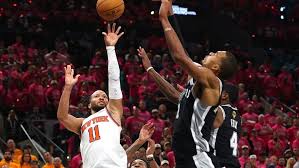


Madison Square Garden was electric for the Knicks’ long-awaited first Finals home game in 27 years, packed with celebrities and expectation. Instead of an exclamation point, New York got a wake-up call: the San Antonio Spurs rode a well-executed game plan to a 115-111 upset on June 8, handing the Knicks their first loss at home and keeping the series competitive. The result underlined how pressure can bend a team’s strengths, and how a disciplined opponent can exploit the cracks.
New York entered Game 3 buoyed by two road victories, but those wins also raised expectations to almost unbearable levels for a franchise unused to this stage. The palpable pressure at MSG showed in key moments: the Knicks’ normally sharp ball movement stalled late in possessions, and a handful of contested shots that would usually fall instead rimmed out. The crowd’s energy, while intense, added weight to the shot clock rather than lifting the home side when it mattered most.
San Antonio’s adjustments were clear and targeted. First, they tightened perimeter defense without overcommitting, forcing the Knicks to take more isolation possessions and contested mid-range attempts. Guards on the Spurs hedged hard on screens to slow down New York’s pick-and-roll rhythm, then recovered smartly to contest shooters. That stickiness limited the Knicks’ ability to get easy catch-and-shoot opportunities from the wings — a staple of their earlier success.
Second, the Spurs attacked the glass with renewed aggression. San Antonio won several critical offensive rebounding duels, turning long possessions into extra scoring chances at crucial moments. Those second-chance points not only padded the scoreboard but also halted the Knicks’ attempts to build late-game momentum. When a crowd senses a team missing out on rebounds, frustration grows, and tonight that pressure manifested in rushed possessions.
Third, the Spurs mixed shot selection intelligently. They didn’t try to outgun New York from deep; instead they alternated pick-and-roll penetration with timely mid-range pull-ups and cuts to the rim. This unpredictability kept the Knicks’ defense guessing and opened lanes for efficient scoring. Coach San Antonio’s rotations showed faith in role players to hit clutch shots, and several bench contributions swung the scoreboard in favor of the visitors.
On the flip side, the Knicks’ execution under pressure faltered in two key areas. Turnovers rose at inopportune moments, often after crisp offensive sets that broke down in the final pass. Free-throw shooting, too, wavered — missed opportunities at the charity stripe added up and proved costly in a four-point finish. These are the small margins that separate comfort from chaos in playoff atmospheres, and the Spurs capitalized.
Looking ahead to Game 4 on June 10, the onus will be on New York to recalibrate. That means simplifying late-game decisions, emphasizing crisp ball movement to find open looks, and tightening the defensive rebounding lanes to deny second chances. For San Antonio, the key will be maintaining the disciplined approach: keep hedges physical but controlled, crash the offensive boards, and trust role players in high-leverage situations.
Ultimately, Game 3 was a reminder that experience alone doesn’t inoculate a team from pressure; strategic countermeasures and composure can tilt a raucous environment into a neutral one. The Spurs showed they can adapt and execute under Finals intensity, and the Knicks now face the task of turning a historic night’s pressure into fuel rather than a burden.