
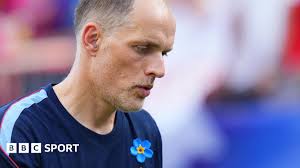


Thomas Tuchel’s recent comments about England’s chances at the 2026 World Cup read like a careful piece of sideline strategy: blunt, measured, and designed to shift the spotlight. By insisting the Three Lions should not be treated as heavy favorites, Tuchel mixed practical warnings about environmental and competitive challenges with a clear signal that expectations must be managed. The question for observers is whether this is tactical brinkmanship meant to ease pressure or an honest assessment grounded in evident risks.
Tuchel foregrounded climate as a decisive factor, pointing to the extreme heat and humidity expected in several US venues. Those conditions favor teams accustomed to playing in similar environments; South American heavyweights such as Brazil and Argentina naturally fit that profile. Heat affects pacing, recovery, and substitution tactics—elements that can upend a squad relying on relentless pressing or high-tempo transitions. By highlighting this, Tuchel not only prepares fans for a different England identity in the tournament (measured, conservation-minded) but also signals to opponents that the team will adapt its tempo rather than force a European-style endurance battle.
He also tempered optimism with competitive realism, citing recent triumphs by Spain and France as reminders that Europe still produces elite challengers. Those sides bring tactical maturity and depth, and Tuchel’s nod to them underlines how narrow the margin for error will be. England’s squad depth looks impressive on paper, but tournaments are won through management of minutes, rotation, and resilience—areas where experience and coaching nuance matter as much as individual talent.
Tuchel’s update on Bukayo Saka adds another tactical layer. Confirming that Arsenal’s star is still dealing with an Achilles issue and that his minutes will be controlled during the group stage signals a prioritization of long-term tournament fitness over short-term spectacle. That decision aligns with the climate concerns: in hotter conditions, managing key players’ workloads becomes critical. Limiting Saka’s minutes early on preserves him for decisive knockout ties, but it also requires other forwards to shoulder creative responsibility—testing England’s squad cohesion under pressure.
Viewed through a psychological lens, Tuchel’s restraint can be read as classic pressure-diffusion. Publicly downplaying title chances reduces the weight of expectation on players, granting them more freedom to express themselves without shouldering a historic burden. England’s national narrative—still waiting for a major trophy since 1966—creates an intense media furnace. Tuchel’s comments recalibrate that narrative, offering the team psychological breathing room and a simpler public benchmark: perform, progress, and adapt rather than win at all costs.
However, there’s an honesty to his message that shouldn’t be dismissed as mere gamesmanship. Climate realities, rival strengths, and injury management are concrete variables that materially affect tournament outcomes. Underplaying England’s chances without acknowledging these factors would be disingenuous. By naming them, Tuchel sets a pragmatic framework: success will depend on tactical flexibility, squad rotation, and the ability to win through control and efficiency rather than aesthetic dominance.
Whether it’s mind games or realism may ultimately matter less than the effect. If his words truly free players from crushing expectations and allow a pragmatic tournament strategy to take root, England could outperform their billed status. Conversely, if external critics interpret caution as timid ambition, pressure could re-congeal around the team. The cleanest reading is a blend: Tuchel is both shielding his squad and offering a sober game plan shaped by environment, injuries, and elite competition.
As the World Cup approaches, England’s fortunes will hinge on how well Tuchel turns caution into coherent strategy—balancing climate adaptation, player management, and psychological poise. That balance, more than a public prediction, might be England’s most decisive tool in a tournament full of variables.