
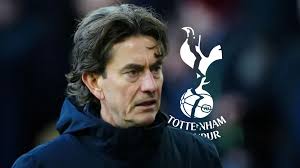


The UEFA Champions League knockout phase ignites next week with Leg 1 ties on February 17-18, injecting urgency into Europe’s elite clubs just as domestic drama unfolds. Tottenham Hotspur’s shocking decision to sack Thomas Frank after a string of limp defeats has left N17 in chaos, amplifying the stakes for their Champions League campaign. Meanwhile, Atletico Madrid’s 4-0 demolition of Barcelona in the Copa del Rey semi-final first leg hints at Diego Simeone’s side mounting a La Liga title charge, exposing Barca’s frailties amid their own European push. Yet amid the continental spotlight, Spurs’ managerial vacancy demands scrutiny—not just a quick fix, but a tactical surgeon for deep-rooted flaws.
Thomas Frank’s tenure at Tottenham crumbled under mismatched philosophies. Hired to instill Brentford’s compact, counter-punching identity, Frank deployed a 4-3-3 that prioritized midfield overloads and rapid transitions, leveraging Son Heung-min’s pace and James Maddison’s creativity. Early promise faded as structural cracks emerged: Spurs’ high defensive line, inspired by Frank’s Gegenpress lite, invited exploitation, conceding 2.3 expected goals per game in their last five outings. Full-backs like Destiny Udogie wandered forward, leaving Pedro Porro isolated and the center-back pairing of Romero and Van de Ven exposed to balls in behind. Midfield lacked dynamism—without a true No. 6 like Yves Bissouma at peak, Yves Bissouma’s deeper role faltered against pressing teams, allowing opponents to bypass into wide channels. Frank’s insistence on fluid rotations stifled Brennan Johnson’s directness, turning Tottenham into a possession-heavy side (58% average) devoid of penetration—only 1.1 xG from open play per match in defeats. It was attractive in theory, but brittle against elite pace, culminating in fan unrest and boardroom panic.
This isn’t mere form; it’s systemic misalignment with Spurs’ high-octane squad. Enter the shortlist of international saviors, starting with Xabi Alonso. The Bayer Leverkusen maestro, fresh off multiple Bundesliga triumphs, thrives on a 3-4-3 diamond that weaponizes wing-backs—perfect for Porro and Udogie surging as Grimaldo-esque threats. Alonso’s data-driven build-up (top in Europe for progressive passes) would unlock Maddison as a roaming No. 10, feeding Son and Richarlison via third-man runs. His Leverkusen averaged 2.4 goals per game with suffocating regains; at Spurs, he’d fuse Ange Postecoglou’s attacking ethos with tactical steel, neutralizing Champions League beasts like Real Madrid.
Ruben Amorim offers Portuguese pragmatism. Sporting CP’s 3-4-3 wizard turned mid-table talent into champions through vertical pressing traps and Morten Hjulmand-style anchors—envision Bissouma reborn. Amorim’s system demands athletic wing-backs and dual-threat strikers, aligning seamlessly with Tottenham’s roster: Johnson bombing forward, Kulusevski inverting, and Solanke (if signed) as focal point. Sporting conceded just 0.9 xGA per game; he’d instill defensive identity without sacrificing Spurs’ flair, ideal for knockout grinders. Risks? His relative youth might buckle under Premier League scrutiny, unlike Alonso’s proven mettle.
Other whispers include Julian Nagelsmann’s high-wire chaos or Andoni Iraola’s Bournemouth intensity, but Alonso and Amorim uniquely address Spurs’ entropy—neither demands wholesale reinvention. With Champions League progression hinging on tactical cohesion against Arsenal or Inter Milan, Tottenham can’t afford interim mediocrity. Frank’s exit exposes the Premier League’s brutality: even innovative coaches falter without squad synergy. The board’s choice will define not just survival, but Spurs’ continental ceiling. In a week of European spotlights, Ange’s heirs must deliver evolution, not revolution.