
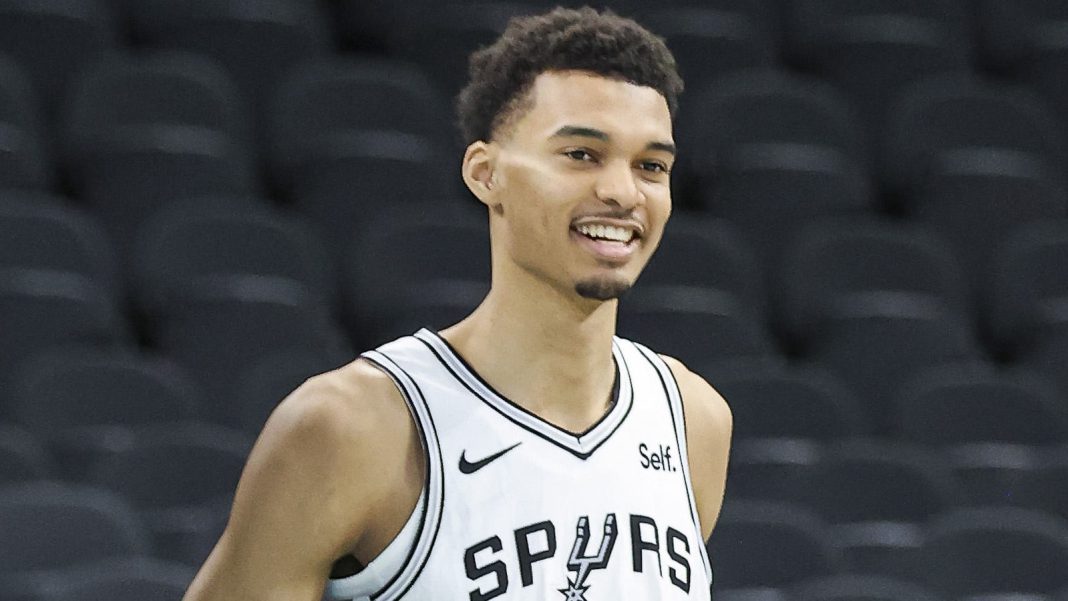


Victor Wembanyama stirred the NBA conversation with a confident, unfiltered assessment of the league’s top talent during a recent ESPN interview. The San Antonio Spurs sensation, gearing up for his return after sidelining a calf injury for the past 12 games, didn’t hold back when asked who reigns supreme in the NBA today. While many pundits and fans crown three-time MVP Nikola Jokic as the undisputed best, Wembanyama drew a clear line, praising Jokic’s offensive mastery but knocking him for defensive shortcomings that keep him from the top spot.
Wembanyama was direct: “I think Jokic is the best offensive player. I don’t think he’s the best player.” Instead, he spotlighted versatile two-way forces like Milwaukee Bucks powerhouse Giannis Antetokounmpo and Oklahoma City Thunder guard Shai Gilgeous-Alexander as the real contenders. “It’s hard to say,” he added, “I think it’s between Giannis and Shai.” Then came the mic-drop moment, laced with the swagger expected from a 7-foot-4 prodigy: “When I come back on the court, I think it will be me.”
This subtle shade at Jokic highlights a key debate in modern basketball: does offensive brilliance alone suffice for GOAT status, or must elite defense seal the deal? Jokic, the Denver Nuggets’ serene maestro, dominates with triple-doubles, playmaking wizardry, and scoring efficiency, leading his squad to a 2023 championship. Yet critics, including Wembanyama, point to his relative defensive limitations—often targeted in pick-and-rolls—as a glaring hole in an otherwise flawless resume. Wembanyama’s view aligns with those prioritizing balance, elevating players like Giannis, whose freakish athleticism fuels rim attacks and chase-down blocks, or SGA, whose scoring explosions pair with lockdown perimeter defense.
The French phenom’s self-assured prediction isn’t baseless bravado. At just 21, Wembanyama has already posted video-game stats in his sophomore season: averaging 24.5 points, 11.2 rebounds, and 3.8 blocks per game before injury struck. His unicorn skill set—rim protection, three-point range, and guard-like handles—positions him as a generational disruptor. Spurs fans salivate at his return against a loaded Western Conference, where matchups like the upcoming March clash with Denver could turn personal. Jokic, no stranger to trash talk, has elevated against elite bigs before, including early duels with Wembanyama that showcased his competitive fire beneath the chill exterior.
Jokic’s laid-back demeanor might shrug off the diss— he’s dodged bigger barbs with a smile—but louder egos like LeBron James or Kevin Durant could spark feuds. Wembanyama’s candor reflects his meteoric rise: from No. 1 overall pick to Rookie of the Year, now eyeing MVP contention. His injury hiatus, tied to a cautious ramp-up on that nagging calf, has kept San Antonio treading water, but his return promises fireworks.
This exchange underscores the NBA’s subjective hierarchy, where narratives shift with performances. Jokic chugs toward another MVP, Giannis hunts rings, SGA carries OKC’s contention push, and Wembanyama lurks as the wildcard. As he heals, all eyes turn to whether the Alien delivers on his bold claim. In a league of alphas, such takes fuel rivalries and elevate the discourse—exactly what basketball thrives on.