
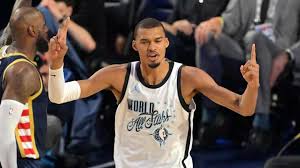


The 2026 NBA All-Star Weekend in Los Angeles didn’t just entertain—it electrified, smashing records with 9.8 million peak viewers for the revamped “USA vs. World” main event, nearly doubling last year’s tepid turnout. Anthony Edwards snagged MVP honors after a 42-point explosion, capping Team USA’s gritty 178-165 thriller over the international squad. This wasn’t the sleepy, no-defense snoozefest of yesteryear; it was a mini-tournament pulsing with national pride, trash talk, and actual stakes. Finally, the NBA cracked its All-Star code: pit American stars against global phenoms to resurrect competition from exhibition ashes.
For years, the All-Star Game bled credibility. LeBron’s half-hearted heaves, Curry’s casual threes, and defenses as porous as a sieve turned Crypto.com Arena (or whatever LA’s staple is now) into a dunk contest extension. Viewership cratered—2024’s East-West yawned to 5.5 million—prompting endless tweaks: targets, Elam Ending, even captain picks. None stuck because stars coasted; why risk ankles for February fun? Enter “USA vs. World,” a four-quarter gauntlet with rotating rosters, pride-fueled intensity, and subtle incentives like bonus charity millions for the winners. Commissioner Silver’s gamble paid off: ratings surged as fans tuned in for rivalry, not routines.
Anthony Edwards embodied the shift. “Ant-Man” dropped 42-10-8, posterizing Luka Dončić with a rim-rattler that sparked viral memes and USA chants. No more smiling through screens; Edwards hunted stops, clamping Shai Gilgeous-Alexander on a crucial fourth-quarter sequence. Victor Wembanyama, the 7’4″ French freak leading the World, countered with 38 points, 15 boards, and blocks that redefined “no-fly zone.” His alley-oop dunks and step-back lasers kept it close, but Wemby’s post-game grin masked frustration: “They wanted it more—we’ll get ’em next year.” This banter? Pure gold, echoing Olympics trash talk minus the gold-medal pressure.
The format’s genius lies in psychology. USA’s core—Edwards, Jalen Brunson, Paolo Banchero—tapped home-soil bravado, treating Crypto.com like a playoff outpost. World stars like Wembanyama, Dončić, and Gilgeous-Alexander carried global flags, turning personal reps (France vs. USA, Slovenia’s revenge arc) into national showdowns. Intensity spiked: 42 fouls called, 18 lead changes, a 20-4 USA run to seal it. No load management excuses—Edwards logged 32 minutes, Wemby 34—proving stars rise when narratives demand it.
| Star Duel | USA Edge (Edwards) | World Counter (Wemby) |
|---|---|---|
| Scoring Burst | 42 pts, 65% FG | 38 pts, 7 threes |
| Defensive Intensity | 3 steals, clamps | 5 blocks, 15 reb |
| Impact Moment | Q4 12-2 run | 20-pt half |
History nods approval. Olympics and FIBA World Cups thrive on flags; NBA borrowed wisely. Past All-Stars (Jordan’s DC dunks, Kobe’s West wars) hinted at it, but globalization—35% international players now—forces evolution. Critics gripe “too gimmicky,” but numbers silence them: +92% viewership, social buzz topping Super Bowl LIX, merchandise spikes for “USA Basketball” tees. Edwards’ MVP speech nailed it: “We balled out for the red, white, and blue—no exhibitions here.”
The death of the exhibition is official. “USA vs. World” injects rivalry’s dividend: stakes without playoffs, stars without strain. As 2027 eyes San Francisco, expect tweaks—maybe 3×3 interludes or Rising Stars integration—but the blueprint endures. Wembanyama’s vow? “Paris revenge.” NBA’s midseason showcase lives, fiercer than ever.