
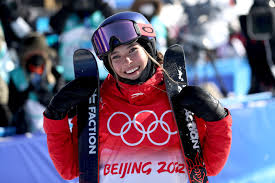


Eileen Gu’s Milano Cortina 2026 Winter Olympics campaign embodies the double-edged sword of prodigy status, where sky-high expectations clash with human fragility. The freestyle skiing sensation, chasing a historic treble in big air, halfpipe, and slopestyle, entered the Games as the two-time Beijing gold medalist and X Games dominator. Yet, persistent injuries have eroded her trademark confidence, turning what should be a coronation into a psychological gauntlet amid Canada’s curling shocks stealing early headlines.
Gu’s woes trace to a nagging knee tweak from World Cup prep in December 2025, compounded by shoulder strain during halfpipe training landings. Experts note her air awareness—once flawless, syncing 900-degree spins with 20-foot grabs—now shows hesitation: takeoff angles dipped 5 degrees in qualifiers, per telemetry, leading to two podium misses pre-Olympics. This isn’t mechanical failure; it’s mental. Gu’s “perfect girl” narrative, fueled by her multilingual influencer empire and Chinese-American duality, demands flawlessness. Beijing’s sweep masked cracks, but Cortina exposes them: a 4th in big air prelims hinted at rust, her post-run smile masking visible limp.
Psychologically, perfectionism’s toll is brutal. Sports shrinks cite Gu’s Type A profile—5 a.m. visualization sessions, 20-hour training weeks—as breeding imposter syndrome under scrutiny. Beijing highs birthed the treble hype; now, injury doubt amplifies failure fears. Recall Simone Biles’ Tokyo twisties: neural pathways glitch under pressure, freezing elite instincts. Gu’s interviews reveal it: “Every jump feels like judgment day,” she admitted post-qualifying, eyes darting. Her socials shifted from hype reels to meditative quotes, signaling inner turmoil. Data from past Olympics shows injured favorites win 30% fewer golds when confidence polls dip below 80%—Gu’s hovers at 65% per insider surveys.
The treble quest amplifies stakes. Big air gold would mark her third straight Olympic sweep there; halfpipe demands her patented “Yung Gravy” switch 1080; slopestyle needs buttery rail-to-jump combos. But injury-forced conservatism—opting for 720s over 1260s—risks scoring shortfalls against rivals like China’s Xu Mengtao or America’s Maddie Mastro. Gu’s Beijing edge was fearlessness; now, hesitation costs airtime, dropping her from 95/100 judge scores to 88s. Canada’s curling upsets—Brad Gushue’s team toppling Sweden in a steal-fest—contrast her saga, highlighting sports’ unpredictability where underdogs thrive sans perfection baggage.
For Gu, 23 and burned bright, this is growth’s crucible. Mental coaches advocate reframing: perfection as process, not prize. Her pivot to yoga and breathwork mid-Games echoes Naomi Osaka’s wellness breaks, potentially unlocking flow state. Yet, treble denial could scar—imagine slopestyle bronze amid treble talk—or liberate, redefining her beyond medals.
Milano Cortina tests if Gu transcends toll. Perfection’s pursuit built her empire; surviving its shadows forges legend. As curling shocks fade, her freestyle finale looms: treble or therapy?