
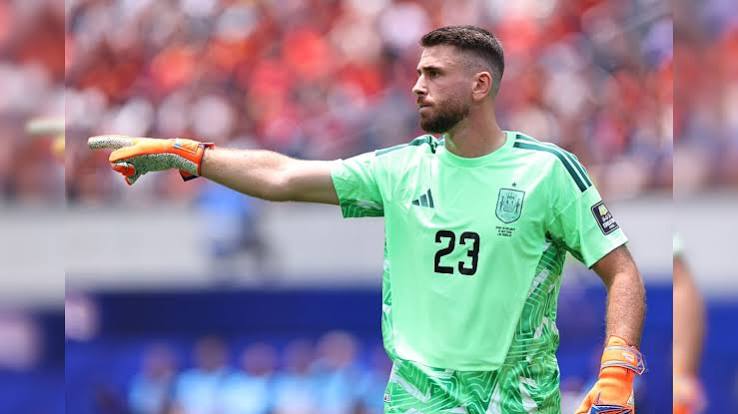


Spain’s defensive fortress finally yielded. After a run that stretched to 650 minutes without conceding, Unai Simón’s streak ended when Belgium found a breakthrough in a blockbuster World Cup showdown in North America. The goal not only halted a personal milestone but also tested Spain’s identity: are they a team built to absorb pressure or one that can recover quickly when its backbone is breached?
That Belgium goal offered a reminder that defensive records are as fragile as the moments that break them. Spain’s structure—compact lines, fluid midfield cover, and disciplined full-backs—has been the foundation of their tournament form. But long shutouts can mask subtle vulnerabilities: overreliance on possession to smother danger, occasional lapses of concentration during transitions, and difficulty handling sustained physical duels against teams willing to play direct. Belgium’s breakthrough came from persistence and alternating patterns—probing wide, then switching inside to create hesitation—forcing a split-second defensive error that a top striker ruthlessly exploited.
For Unai Simón, the end of a 650-minute run is a milestone, not a condemnation. Goalkeeping form fluctuates with team shape and individual margins; one goal should not erase the composure and shot-stopping that defined his run. The bigger question for Spain is psychological: can the team shrug off the moment and reassert the principles that produced such consistent defensive excellence? How coaches reset the group after a blemish will say as much about Spain’s tournament prospects as tactics on the training ground.
Across the bracket, England under Thomas Tuchel faces a different kind of test—one of tactical nuance rather than defensive record. Their upcoming match against Norway, guided by Ståle Solbakken, promises a chess match. Tuchel, a manager who prizes structural discipline and flexible pressing triggers, will aim to control tempo and nullify Norway’s strengths. England’s challenge is to balance intensity with positional coherence, ensuring their press does not leave lanes exposed for Norway’s counterattacks.
Norway’s recent surge has been grounded in physicality, clinical transition play, and a clarity of roles. Solbakken has encouraged aggressive wing play and quick vertical passes that aim to exploit gaps behind advancing full-backs. Against Tuchel’s system, Norway will look to create two-versus-one situations on flanks and then feed runners into the box before England can re-organize. Set pieces and second-ball competitiveness will also matter; games between methodical approaches and dynamic counters often turn on details in these phases.
Tuchel can counter by varying press triggers, rotating his full-backs’ involvement to prevent predictable channels, and using midfield runners to create overloads in the half-spaces. If England can control possession in zones that limit Norway’s transition windows—while still carrying threat in forwards to punish defensive hesitation—they tilt the balance toward a methodical win. Conversely, if Norway forces high turnovers or isolates England’s wide defenders, the match will shift toward a faster, more chaotic rhythm that favors the underdog’s momentum.
Both storylines—Spain’s fractured wall and England’s tactical duel with Norway—underscore the tournament’s shifting dynamics. High-level football at this stage becomes less about isolated performances and more about reaction: how teams respond to adversity, how managers adapt in-game, and how moments of risk become turning points. A single goal ending a legendary streak and a tightly poised tactical battle on the horizon make for a World Cup turning into a war of wits and will. Fans should expect adjustments, second-guessing, and intelligent risk-taking as the best teams try to convert small advantages into lasting momentum.