
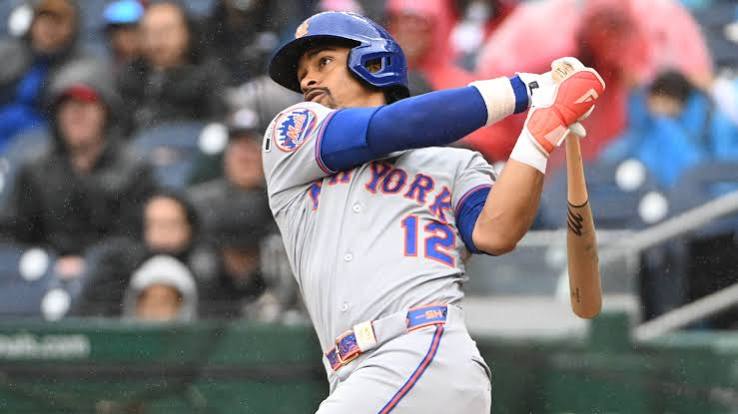


Francisco Lindor added another major achievement to an already distinguished career when he launched his 300th Major League Baseball home run against the Washington Nationals. The New York Mets shortstop reached the milestone with a 409-foot solo drive in the second inning of the season finale, turning a personal landmark into another important chapter in his Hall of Fame argument.
Lindor attacked a 92.9 mph fastball from Nationals left-hander DJ Herz and sent it deep into the left-field seats. The blast left his bat at 110.8 mph and became his 21st home run of the 2026 season. It was also his first homer since September 12, ending a short wait for a milestone that had been approaching throughout the month.
The Mets eventually lost 6-4, but the result could not diminish the importance of Lindor’s achievement. He became the 172nd player in MLB history to reach 300 home runs and one of only a select number of switch-hitters to accomplish the feat. He is also the third primary shortstop to reach the mark, joining Cal Ripken Jr. and Miguel Tejada.
What makes Lindor’s home-run total especially meaningful is the position he plays. Shortstop demands range, footwork, arm strength and constant concentration, yet Lindor has remained a dangerous offensive player throughout his career. His value has never depended on one elite skill. Instead, he has built his reputation through a combination of power, speed, defensive excellence and positional durability.
Lindor’s ability to hit from both sides of the plate has played a major role in that success. Switch-hitting allows him to avoid the worst platoon disadvantages and gives him a better opportunity to attack favourable matchups. It also requires separate swing mechanics, timing patterns and preparation routines for each side of the batter’s box.
His power has remained remarkably consistent. Lindor has produced 20 or more home runs in each full season since 2015, with the exception of the shortened 2020 campaign. That decade-long reliability is important when evaluating his long-term legacy. A player may reach 300 home runs through a few exceptional seasons, but Lindor’s total has been built through sustained production at a premium defensive position.
The milestone also adds weight to his offensive value with the Mets. Lindor has hit 162 home runs since joining New York before the 2021 season, giving the franchise both middle-of-the-order production and dependable leadership from the shortstop position.
His Hall of Fame case, however, will not be based solely on home runs. Lindor has been a five-time All-Star and has earned recognition as one of the best all-around shortstops of his generation. His defensive work, baserunning and ability to play every day provide context that raw power numbers cannot capture.
He has also joined an even smaller group of switch-hitters who combine 300 home runs with at least 200 stolen bases. Carlos Beltrán is the only other player in that category, according to MLB reporting. That combination illustrates Lindor’s broader profile: he has not been merely a power hitter who happens to play shortstop.
The remaining question is where Lindor’s career totals will finish. At 32, he still has time to add significantly to his home-run and stolen-base numbers. If he maintains his current level of production and defensive impact for several more seasons, his Cooperstown case will become increasingly difficult to dismiss.
The 300th home run was therefore more than a memorable swing in a losing effort. It confirmed Lindor’s place among the most complete switch-hitters in baseball history and strengthened the argument that his career belongs in the Hall of Fame conversation.